At 15, most cricketers are still figuring out how to lace up their boots in a senior dressing room. Vaibhav Sooryavanshi is already dictating terms in a Duleep Trophy final.
At the MA Chidambaram Stadium, with East Zone towering over South Zone on the back of captain Ishan Kishan’s majestic 270 in a colossal total of 708, the teenager didn’t just look like he belonged. He looked like he was running the show.
South Zone, under the weight of that mountain of runs, had started to find some rhythm in their reply. The ball had gone a bit soft, the pitch had flattened, and the game drifted into that dangerous lull where a final can quietly swing away from the dominant side.
Then the 15-year-old vice-captain stepped in.
A teenager’s finger goes up before the umpire’s
Mukesh Kumar bent one down the leg side to Ricky Bhui. A faint brush, a half-hearted appeal, and the umpire stayed stone still. South Zone breathed again. It looked like one of those moments that vanish in a long first-class day.
Not for Sooryavanshi.
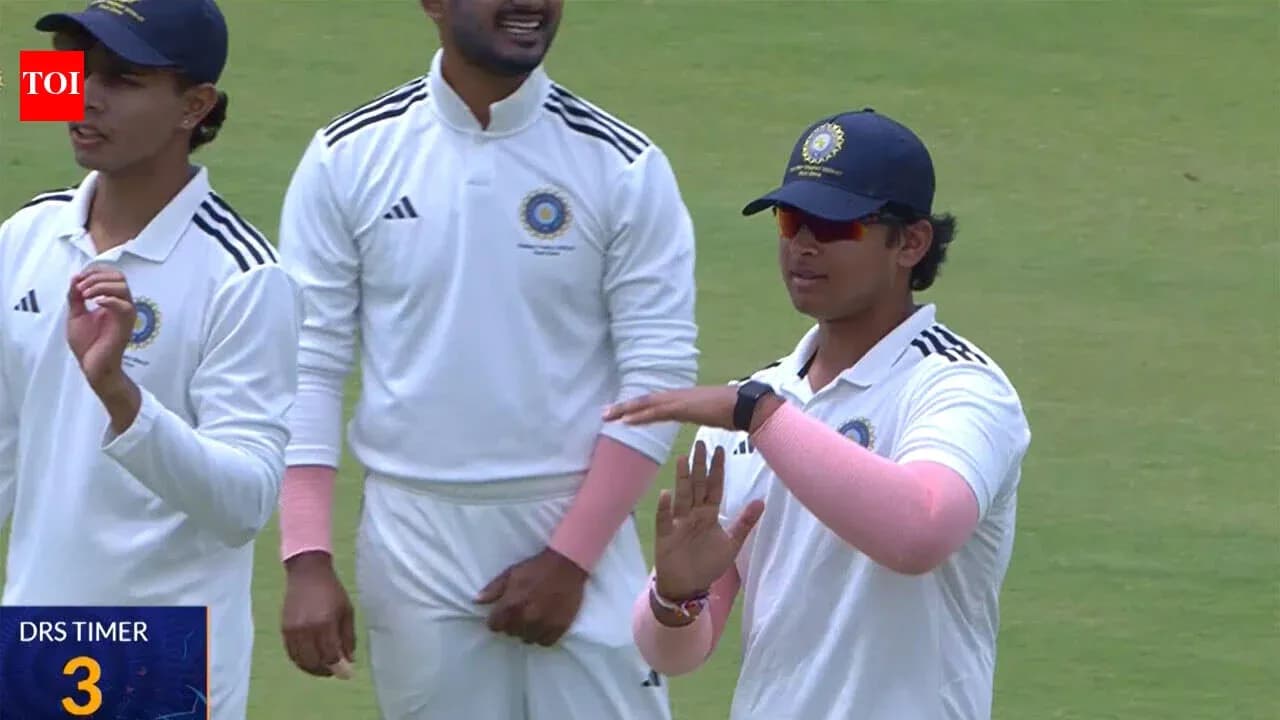
Stationed in the cordon, he was certain he’d heard something. No hesitation, no deference to age or hierarchy. He went straight to Kishan, urging the East Zone captain to send it upstairs. Take it. Take the review.
Kishan trusted him. UltraEdge backed him. A clear spike as the ball passed the bat, Kumar Kushagra’s catch suddenly upgraded from hopeful to decisive. Bhui had to walk.
The dismissal was sharp, but the story was the decision. BCCI themselves clipped the moment and pushed it out on social media, quoting the teenager’s insistence: “Take it... take it.” It wasn’t just a good call; it was a glimpse of a young cricketer already comfortable making big decisions in big moments.
On a field full of seasoned professionals, the youngest voice had been the clearest.
Acting captain, bold call, instant reward
The clock ticked towards tea on Day 3. South Zone were 174 for 4, edging towards the interval with a measure of stability. Kishan had gone off the field, and suddenly the 15-year-old found himself acting captain in a Duleep Trophy final.
He didn’t hide behind the role. He reached for the most demanding option.
Mohammed Shami had already put in a heavy shift. Seven overs in his first spell, treatment to his neck from the physio, and only two short bursts after lunch. Many stand-in captains would have banked on getting him fresh after tea.
Sooryavanshi dragged him back into the attack immediately.
It was a ruthless little tactical gamble: one short, hostile burst before the break, one more crack at South Zone’s middle order when minds were already drifting towards the dressing room.
The move paid off almost at once. Smaran Ravichandran, last season’s highest run-scorer in the Ranji Trophy and the one batter East Zone did not want settled, chased at a ball outside off and feathered it behind. Again, the on-field umpire said no. This time it was Kushagra who pushed for the review.
Again, UltraEdge showed the truth. Another spike. Another wicket. South Zone slipped from 174 for 4 to 176 for 5, and again the teenager was right in the middle of it — first as the captain who brought Shami on, then as the decision-maker who backed technology at the right time.
In the space of a session, Sooryavanshi had directly influenced two of the most important breakthroughs of East Zone’s final.
A pattern, not a fluke
This wasn’t some one-off flash of precociousness on a big stage. His DRS calls have become a quiet theme of East Zone’s campaign.
In the semifinal against Central Zone in Bengaluru, Aryan Juyal had looked set, on 46, when Mukesh Kumar drew him into a push outside off. A full-throated appeal, a firm shake of the head from the umpire, and the usual confusion that follows: glances, half-shrugs, time ticking down.
Again, it was Sooryavanshi who cut through the noise.
He trusted what he’d heard and seen, and at the last moment called for the review. UltraEdge lit up once more. Another edge, another key wicket, another moment where the teenager’s conviction outmuscled doubt.
Three major DRS interventions in one tournament, all in high-pressure situations, all going his way. For a player barely old enough to sit his board exams, that’s not luck. That’s temperament.
More than just a batting prodigy
Most of the early noise around Sooryavanshi has focused on his batting, and with reason. His runs have pushed him quickly into the conversation as one of Indian cricket’s most exciting teenage prospects.
But this Duleep Trophy run is painting a fuller picture.
He has spoken openly about wanting to contribute with the ball as well, and did it with a touch of humour in a BCCI Domestic video, joking that he sees himself as a “wicket-taker.”
“Opponent team’s wickets weren’t falling, so I was asked to bowl two or three overs. Ishan Bhaiya felt like he was taking a risk, but he didn’t know that I am a wicket-taker,” he said, smiling.
Behind the joke lies the mindset of a player who wants the ball, wants the responsibility, and isn’t cowed by the stage. The same mindset that tells a senior India international to take a review. The same mindset that brings a battle-hardened Shami back for a last burst before tea.
At Chepauk, in the heat and scrutiny of a Duleep Trophy final, a 15-year-old didn’t just survive senior cricket. He shaped it. How long before he starts doing the same on even bigger stages?