The list used to feel like a closed shop. Devon Conway on top, Nathan Astle all over the rest of it. New Zealand openers who went big against India formed a small, elite group.
Now it has a new member.
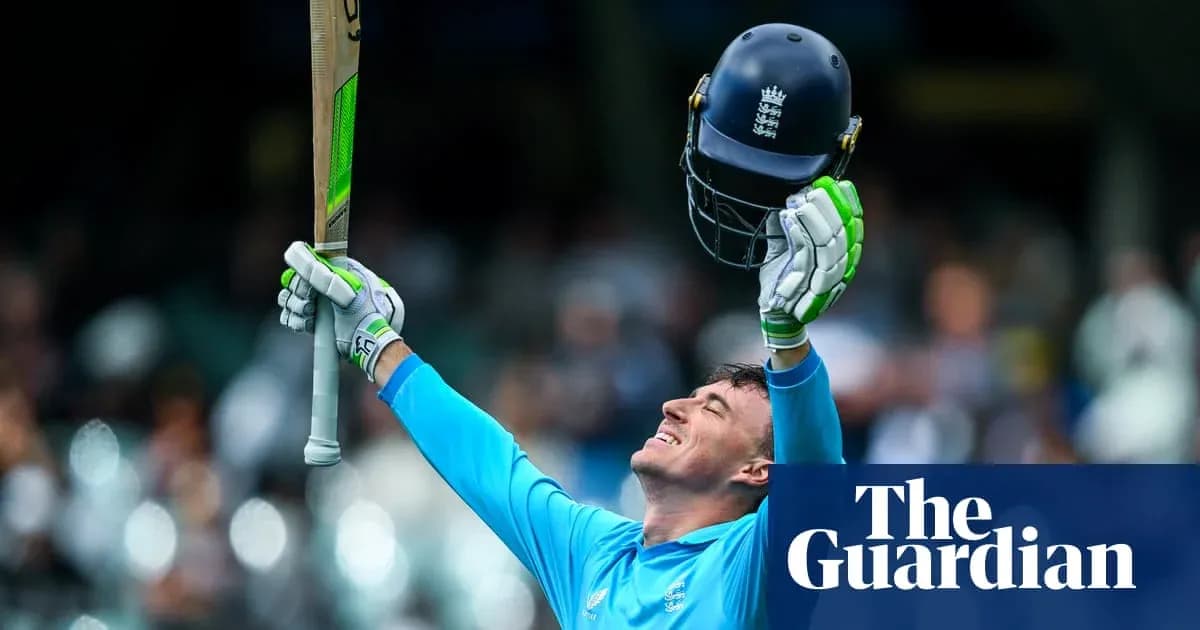
At Mount Maunganui in the fourth ODI of the 2026 series, Will Young crashed 125 from 108 balls at Bay Oval, forcing his name into a record chart that had long belonged to just two men. It is now the second-highest ODI score by a New Zealand opener against India, behind only Conway’s blazing 138 in Indore in 2023.
Conway still the benchmark
Conway remains the standard everyone chases. At Holkar Stadium, Indore, on January 24, 2023, he produced a ruthless 138 from just 100 deliveries in the third ODI. Twelve fours, eight sixes, and an innings that, on most days, would decide a game on its own.
India had other ideas. Despite Conway’s assault, New Zealand slipped to a 90‑run defeat, India sealing a 3–0 sweep. The record stayed, the series did not.
That knock still sits at the top of the pile: the highest ODI score by a New Zealand opener against India.
Young’s turn at Bay Oval
Three years later, the script felt different. Same opposition, new setting, new name.
On November 13, 2026, Young walked out at Bay Oval and played the defining innings of his international career so far. His 125 carved out a fresh landmark – the second-highest score by a New Zealand opener against India – and broke the long-standing Conway–Astle duopoly at the top of this list.
For years, when you talked about New Zealand openers punishing India, you talked about Astle’s grit and Conway’s flair. Young has now forced his way into that conversation, becoming the latest Kiwi opener to push beyond 120 in this fixture.
Astle’s era: three epics, three countries
Nathan Astle’s name still dominates the historical record. He appears three times in the top five, a reminder of just how relentlessly he tormented India between 1999 and 2005.
It started in Rajkot. On November 5, 1999, in the first ODI, Astle ground out 120 from 136 balls, lacing 12 fours and two sixes. New Zealand surged to 349 and closed out a 43‑run win. It was a statement: this was an opener willing to bat long, hit hard, and shape matches.
Two years later, the setting shifted to Colombo. At R. Premadasa Stadium on July 20, 2001, in the Coca-Cola Cup, Astle went again. This time he compiled 117 from 150 deliveries, an innings built on nine fours and a single six. New Zealand controlled the game and won by 84 runs, another entry in Astle’s personal ledger against India.
Then came Harare. Different continent, same story. On September 6, 2005, at Harare Sports Club, Astle anchored a chase of 277 with an unbeaten 115 from 131 balls. He stayed there to the end, guiding New Zealand home by six wickets with 11 balls to spare. No flourish, no fuss – just a clinical close-out from an opener who knew exactly how to finish.
Three centuries, three venues – Rajkot, Colombo, Harare – and a six‑year span in which Astle routinely turned India’s bowlers into background noise.
A small, ruthless club
Look at the roll of honour now and the pattern is clear:
- Conway’s 138 in Indore (2023) still leads the way.
- Young’s 125 at Mount Maunganui (2026) has pushed him straight into second.
- Astle’s 120 in Rajkot (1999), 117 in Colombo (2001) and 115* in Harare (2005) complete a top five that stretches across eras and conditions.
Different generations, same theme: when New Zealand’s openers get set against India, they do not waste the opportunity.
Conway set the bar. Astle built the tradition. Young has just announced that it isn’t closed for new members.