Six runs went missing in Windhoek on Tuesday. Louis Pretorius knew exactly where he’d left them.
On that night he walked off on 94 from 51 balls, bowled around his legs as he stepped away in frustration, his first senior international hundred stranded somewhere in the middle of the Namibia Cricket Ground. Teammates had kept getting out, the strike kept slipping away, and the innings ended with a hollow feeling.
On Friday, against Namibia, he went back to collect what the game had taken from him. He didn’t just find those six runs. He found one more.
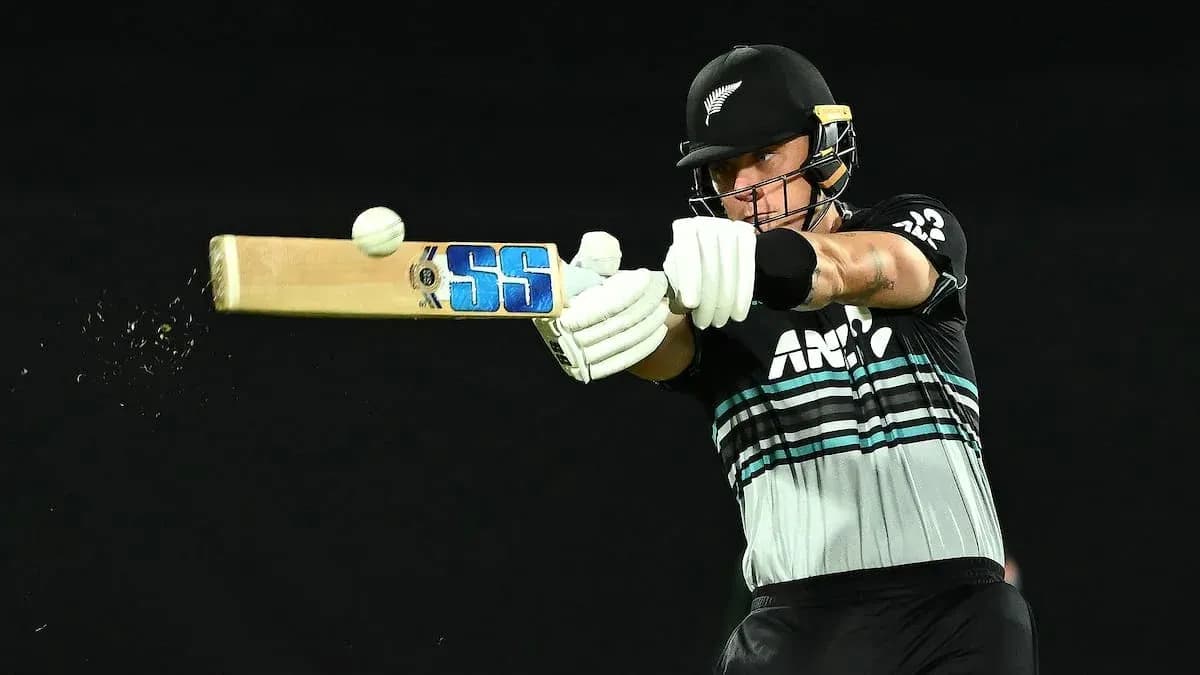
Pretorius thundered his way to 101 off 53 deliveries, a statement innings lashed in fours and sixes – more than two-thirds of his runs in boundaries. Seven of his eight sixes soared straight, in the V, where he plundered 60 off 19 balls. When he wasn’t going downtown, he was carving and clubbing square of the wicket, turning good bowling into damage control.
There’s a certain mythology around left-handers. The easy grace. The languid cover drive. The ball whispering off the bat as if guided, not hit. Think David Gower, Brian Lara – the ballet dancers of the crease.
Pretorius belongs to the other tribe. The Graeme Pollock and Graeme Smith school. Less pirouette, more power tool. He looks and moves like a regular bloke, then hits like one who’s been given a cheat code. No frills, no fuss, just a clean, violent arc and a ball that keeps disappearing into the stands.
That’s part of the charm. Young Lou – the nickname first aired by Quinton de Kock, another left-hander who prefers leather on concrete to artistic brushstrokes – is playing for every club cricketer who’s ever dreamt of batting like this and known they never would.
Esterhuizen Lights the Fuse
On Friday he wasn’t even the most fluent scorer out there.
Connor Esterhuizen, a right-hander with far less mythology attached to his stance, tore into Namibia’s attack with 88 off 40 balls. His strike rate? 220.00. That’s 29.44 points quicker than Pretorius, in an innings that set the tone for South Africa’s biggest total of the tournament.
The pair rattled up 156 off 70 balls for the first wicket, a partnership that felt like a sprint and a mugging rolled into one. Namibia looked up after 12 overs and saw the game already racing away from them.
Esterhuizen eventually fell to Jan Balt, having a wild swipe and losing his leg stump, just as Pretorius had on Tuesday. One swing too many, one fraction off. T20’s brutal arithmetic.
At a press conference, Esterhuizen painted a neat contrast between the two openers. Pretorius, he said, is “super laser-focused and always looking to get at the opposition”. Himself? “Sometimes a bit of a nervous wreck out there.”
Pretorius didn’t quite buy that. Speaking to the host broadcaster, he shifted the spotlight back to his partner: “Connor made it a lot easier for me, and when he lost his wicket I could take charge as the leader in the middle and try to capitalise.”
That word – capitalise – summed up his night. Same plan as Tuesday, very different ending.
“T20 is a game of fine margins and high-risk cricket shots. So when you’re in form you have to ride that wave as long as you can because it can change very quickly,” he said. “I came with the same approach [as on Tuesday]: try to get to that 15-balls [faced] mark. I knew the rest would take care of itself.”
This time, it almost didn’t.
Namibia Refuse to Fold
South Africa’s 228 for 4 was the first 200-plus total of the tri-series, the highest score in the six matches so far. On most nights in Windhoek, that’s a stranglehold. On this one, it was a challenge.
Namibians know how to live with pressure. On the field, off it, they’re used to making something out of difficult conditions. Their chase reflected that mentality.
Louren Steenkamp and Jan Frylinck came out swinging with purpose, not panic. Their opening stand of 119 off 65 balls yanked the contest back from the brink. The required rate stayed high, but it never felt out of reach while Frylinck was at the crease.
The left-hander’s 72 off 36 was a bruising counterpunch. He hit with the kind of clarity that forces fielders back and captains into second plans. Every time South Africa seemed to drag things back, Frylinck found a gap or a boundary.
The turning point arrived in the 11th over. Frylinck pulled Andile Simelane towards the square-leg rope, picking out Tony de Zorzi. De Zorzi danced with the boundary, hopping and skipping over the cushions and back in to complete a sharp catch that demanded balance, awareness and nerve. It was the moment South Africa had been straining for.
Namibia still refused to disappear.
Gerhard Erasmus steadied and then pushed, finishing 30 not out off 26. He never quite found the explosion Frylinck had provided, but he kept the chase honest. Ruben Trumpelmann chipped in with 21 off 10, another jolt that kept South Africa’s bowlers looking over their shoulders.
Namibia closed on 217 for 3. Eleven runs short on the scoreboard, nowhere near that in terms of effort or intent.
A Win, and a Warning
When it was over, there was relief in the South African camp, not celebration.
“It was a bit closer than we wanted, but we’ve learnt to not take anything for granted in this game,” Bjorn Fortuin told the host broadcaster. “A win’s a win and we did some good things, but there’s a lot to work on going into that last game.”
That last line will linger. South Africa have their first 200 of the tournament, a rampant hundred from Pretorius, and an opening partner in Esterhuizen who looks more than ready for this level. They also have a reminder that 228 isn’t always safe, not against a side that bats with Namibia’s stubborn heart.
Young Lou found his missing runs in Windhoek. The question now is whether South Africa can find the control to match their fire before this tri-series reaches its sharp end.