The scandal that was supposed to be buried in Cape Town’s dust is back on centre stage, and this time a quiet swing bowler has walked straight into the spotlight.
Chadd Sayers, the journeyman seamer who played his only Test on that 2018 South African tour, has said out loud what many have only hinted at for years: he believes everyone in that Australian dressing room knew about the ball-tampering.
Sayers did not whisper it in a corridor. He said it on air.
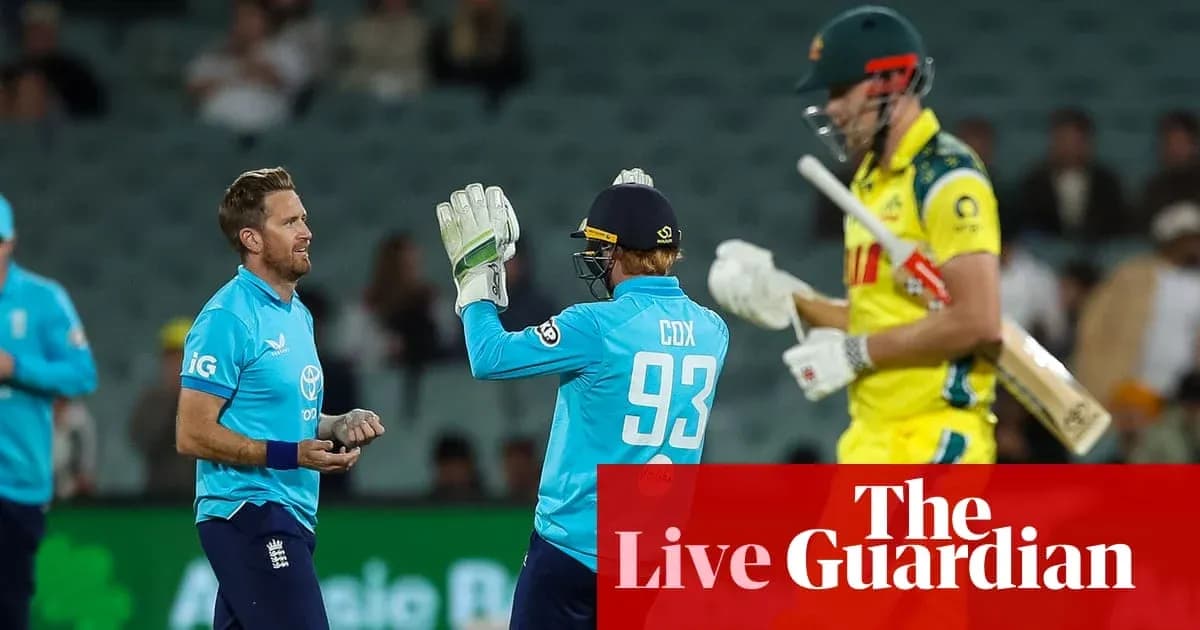
"I'm comfortable saying where I'm sitting now that everyone knew what was going on [in South Africa in 2018]," he told SEN ahead of Australia’s second ODI against England in Adelaide.
He didn’t dress it up. He didn’t pretend his memory was foggy.
"It [sandpaper] was used in two Test matches and there were discussions in change rooms … I'm not taking sides; it's just my recollection of what took place."
Those words land in a sport already reeling from Usman Khawaja’s memoir, Sabr, which has ripped open old scars and forced some of the biggest names in Australian cricket to pick their ground and defend it.
Khawaja’s book, Warner’s backing, Cummins’ fury
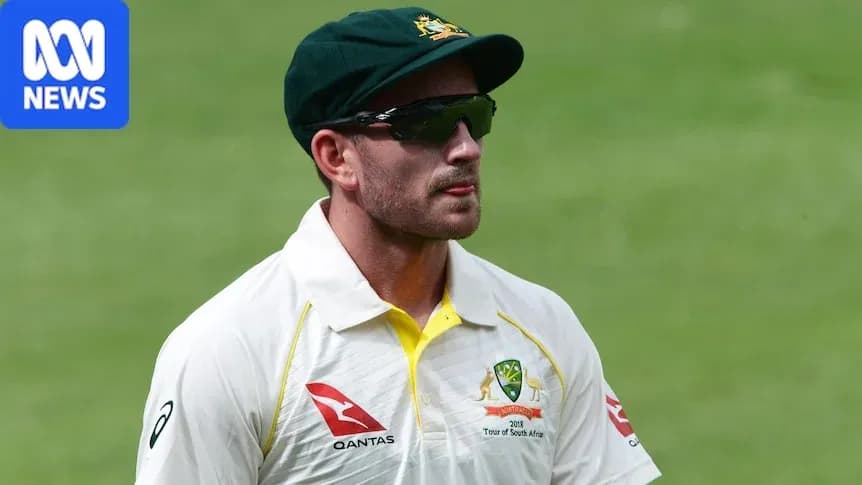
The Cape Town Test, where cameras caught Cameron Bancroft with sandpaper in his pocket, has been dissected for six years. This week, it was reloaded.
In Sabr, Khawaja claims ball-tampering was commonplace and insists the entire team needed to shoulder responsibility. He writes that he knew sandpaper was being used and that he told Bancroft to be careful. He also portrays ball-tampering as part of a wider cricket culture, not an isolated Australian sin.
David Warner, one of the three players banned over the incident alongside then-captain Steve Smith and Bancroft, has thrown his full weight behind Khawaja’s account, calling it "100 per cent accurate".
That endorsement alone would have stirred trouble. Pat Cummins’ response turned it into a storm.
Cummins, now Test captain and a member of that 2018 side, fronted a 70‑minute press conference on Friday. He did not hedge. He did not soften.
"When he says 'we all knew', if by that he means we knew sandpaper was going out on the field, he's 100 per cent wrong," Cummins said.
"I've said that consistently for the last eight years; I did not know that was happening."
He went further, accusing Khawaja of something much more serious than misremembering.
"But I think Usman actually says things that are far more serious than that. He says that I and others were architects of a scheme to ball tamper with sandpaper; that's complete and utter nonsense."
Then came the line that cut to the heart of a fractured dressing room.
"Usman's a friend, but friends aren't casual with each other's lives and reputations. In his book Ussie's been casual with my [life] and the lives of many others, and I think Australian cricket. I support his right to tell a story, 100 per cent. I'm really glad he feels like he can, but we have to be accountable for the things that we say and do."
The captain of Australia accusing one of his senior teammates of being "casual" with lives and reputations. The same teammate claiming sandpaper use was known and normal. Now Sayers adds his voice, saying the room knew and meetings were held for up to 90 minutes after the team was caught.
The neat, official version of Sandpapergate is being shredded in real time.
The bowlers’ denial and Sayers’ recollection
The investigation in 2018 concluded that Bancroft, Smith and vice-captain Warner were responsible for the ball-tampering. All three were suspended. The bowlers from that Test have always denied any knowledge that sandpaper was being used on the ball.
Sayers’ account does not name names. It does something more uncomfortable: it suggests collective awareness.
He says sandpaper was used in two Tests. He says there were discussions in the changerooms. He says there was a long meeting once the team was caught.
For a group that has spent years insisting they had no idea, that recollection hits hard.
Cummins has doubled down on his denial. Others from that bowling unit, including Josh Hazlewood, Mitchell Starc and Nathan Lyon, have consistently maintained they did not know. Officially, nothing has changed.
Unofficially, the gap between the public line and private memories has never looked wider.
Warner turns his guns on Cricket Australia
While Cummins and Khawaja wrestle over truth and reputation, Warner has chosen a different target: Cricket Australia itself.
On Saturday, he used Instagram to suggest the governing body ran a compromised investigation in 2018 and may have protected the bowlers.
"As far as I am aware, CA did not interview Josh Hazlewood, Mitchell Starc or Nathan Lyon in their 2018 investigation," he wrote.
"If that's correct then how can CA push the idea that the bowlers didn't know?
"It looks like they had decided who they wanted to blame from the very beginning … ran a shoddy investigation to serve the purpose and now they want to maintain the false narrative that the bowlers had no idea.
"That stinks of a cover-up."
Multiple outlets, including ABC Sport, have reported that the bowlers were in fact interviewed by Cricket Australia. Warner, though, is not backing away.
On Sunday, he returned to social media to reinforce his point.
"Just to clarify 'As far as I am aware' was the POINT," he wrote.
"I was never told the bowlers had been interviewed or provided statements.
"That information would've been pretty useful when I was forced to make decisions back in 2018.
"Why weren't we given all the evidence by CA?"
It is a question that slices through the heart of the old scandal. Who knew what, and when, is no longer just a moral argument inside a dressing room. It is a challenge to the integrity of the original investigation and to the governing body that ran it.
A culture rebuilt, or a story still being written?
For years, Australian cricket has sold the narrative of renewal: a team chastened by Cape Town, culture rebuilt, standards reset. Cummins has been at the centre of that story, Khawaja too.
Now, one has written a book saying ball-tampering was common and responsibility shared. Another has publicly called those claims "complete and utter nonsense". A former teammate insists everyone knew. Warner is questioning whether the full truth was ever put on the table.
The bans ended long ago. The runs and wickets have flowed since. But the most damaging over from Cape Town 2018 might still be in progress.