Chadd Sayers played one Test for Australia. One cap, one week in the spotlight, then back to the grind.
But eight years on from that chaotic tour of South Africa, the swing bowler has stepped into the centre of cricket’s most stubborn scandal and directly challenged his former captain’s version of events.
Speaking on SEN radio ahead of the second ODI in Adelaide, Sayers said he believes the entire Australian side knew about the use of sandpaper in 2018 – a claim that runs straight against Pat Cummins’ emphatic denials and firmly supports Usman Khawaja’s explosive account.
“I’m comfortable sitting here right now, and where I stand on the situation, that I believe that everyone in that side knew what was going on and what was being used,” Sayers said.
No hedging. No soft edges. Just that.
Port Elizabeth: where Sayers says he knew
Sayers was part of the squad for the South Africa tour and finally made his debut in Johannesburg, coming in for the injured Mitchell Starc in the aftermath of the scandal. Before that, he says, the plan was already in motion.
Asked when he first became aware of sandpaper being used, he pointed straight to Port Elizabeth, the third Test.
“In Port Elizabeth. As it's known now, it was used in two Test matches and there was discussions in the changing-rooms about how were we going to get the ball to reverse, and what was going to be used,” he recalled.
Those dressing-room conversations, as Sayers tells it, were not vague chats about conditions or rough patches on the ball. They were specific.
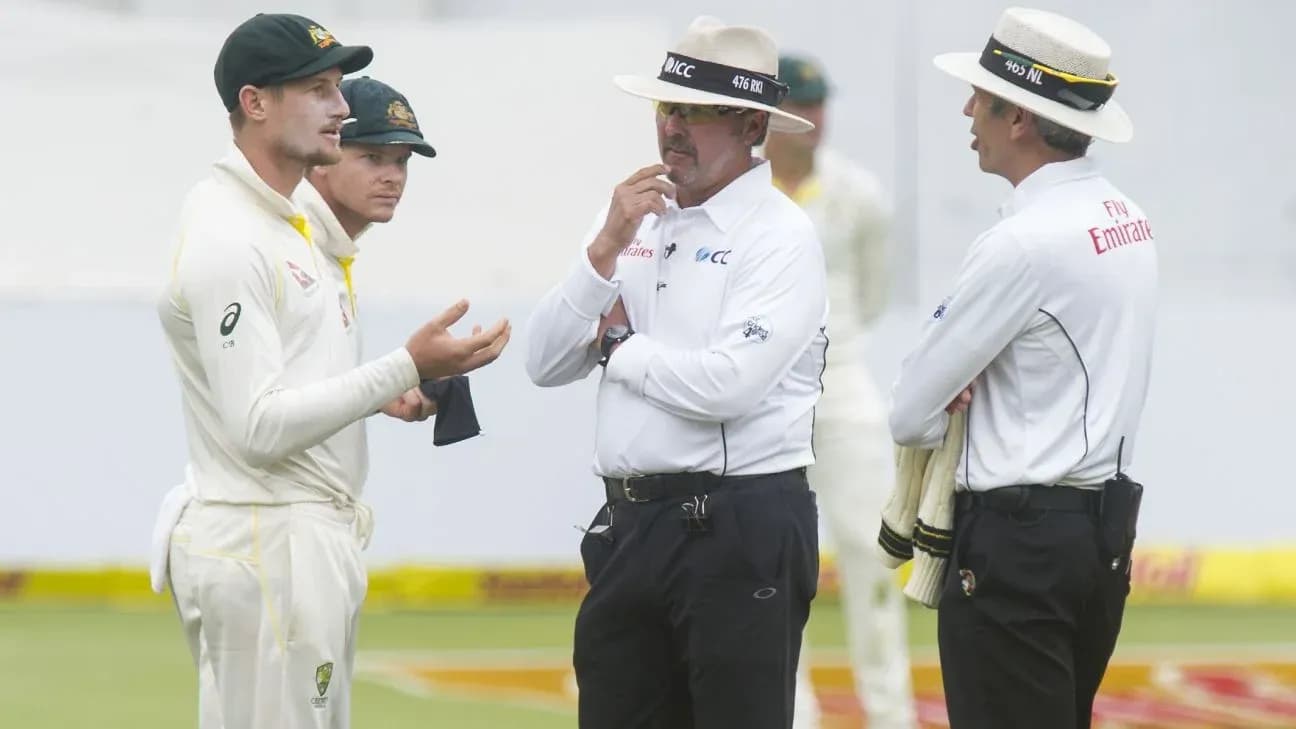
“I just knew that it was going to be used, as I believe everyone else did,” he said. “I guess the plan was that Cameron Bancroft was going to take that out, the ball was going to be dropped on the ground by the umpires and he was going to go about his business … [the sandpaper] was given to me to take off, so that wasn't planned or anything, I was just the player who took the drinks out at the time.”
Sayers was 12th man that day. His job, he says, included quietly removing the incriminating strip from the field once Bancroft had been sprung.
That detail cuts hard against the idea that only a tiny inner circle knew what was going on.
A meeting Cummins says he doesn’t remember
The real collision with Cummins’ version comes in Cape Town, after the plot blew up in front of the world.
On Friday, in a 68‑minute press conference, Cummins insisted he did not recall any team meetings about taking collective responsibility and labelled Khawaja “100% wrong” for suggesting everyone knew about the sandpaper. He accused his former teammate of being “casual with each other's lives and reputations”.
Sayers remembers it differently.
“After the occurrence in Cape Town we all sat in the change-rooms after that day's play, probably for 60 to 90 minutes, and just talked about what had happened and guess where to next,” he said.
A 60–90 minute team meeting. Long, emotional, and, in Sayers’ telling, focused on how the group would respond publicly.
That recollection goes straight to the heart of Khawaja’s claim that there was a push for a collective stance – and that two players in particular resisted it. Sayers said he “vaguely” remembered the two players Khawaja had written about, but made it clear he would not be naming them.
He also pushed back at the idea that he was simply picking a side in a public feud.
“I think I've probably been portrayed in the media as taking Usman's side because I've spoken out and acknowledged that that was probably the truth, but I'm neutral in all this. I'm just trying to tell my side of the story and what I believe happened.”
Could the bowlers really not know?
One of the longest-running arguments around sandpapergate is whether the fast bowlers – the men holding the ball, feeling it, living off its movement – could genuinely be in the dark.
Cummins, Josh Hazlewood, Mitchell Starc and Nathan Lyon have all previously denied knowing sandpaper was being used. That line has held for years.
Sayers, a swing bowler by trade, doesn’t buy it.
“I would have thought as a team, when you're trying to get the ball to reverse, that everyone would buy in because if one little thing goes wrong in the field to the ball, it stops it from reversing straight away,” he said. “So, yeah, as I said, I'm pretty confident to say that everyone knew.”
It’s a simple cricketing logic: reverse swing is fragile. Too much shine in the wrong place, a misfield that scuffs the wrong side, a ball change from the umpires – and the magic disappears. Teams chasing reverse usually obsess over every touch of the ball.
Sayers’ view is blunt: this wasn’t a rogue operation in the shadows. It was a team project.
He admitted he only watched the start of Cummins’ press conference, but even that was enough to jar.
He “didn't like how he did go at Usman”.
Warner keeps swinging at Cricket Australia
While Sayers was reopening old wounds from the dressing room, David Warner was back on social media taking fresh aim at Cricket Australia.
Warner has already called the original 2018 investigation “botched” and said it “stinks of a cover-up”. Over the weekend he suggested he wasn’t aware that Hazlewood, Lyon and Starc had been interviewed as part of the process.
Now, he has slightly adjusted his stance – but only to sharpen his broader point.
“Just to clarify 'As far as I am aware' was the POINT,” he wrote on Instagram. “I was never told the bowlers had been interviewed or provided statements. That information would've been pretty useful when I was forced to make decisions back in 2018. Why weren't we given all the evidence by CA?”
The question hangs there, heavy. If more players were interviewed, why weren’t the central figures told? If they weren’t, why not?
Warner’s anger is not new. What is new is the chorus around him. Khawaja’s book, Sayers’ intervention, and Cummins’ staunch defence of his own reputation have dragged sandpapergate back from the archives and into the present.
What started as a scandal about a strip of sandpaper has become a running argument about truth, memory and loyalty in one of the most scrutinised dressing rooms in world sport.
And with former teammates now contradicting each other on air and in print, one question refuses to go away: how many more versions of the same story are still to come?