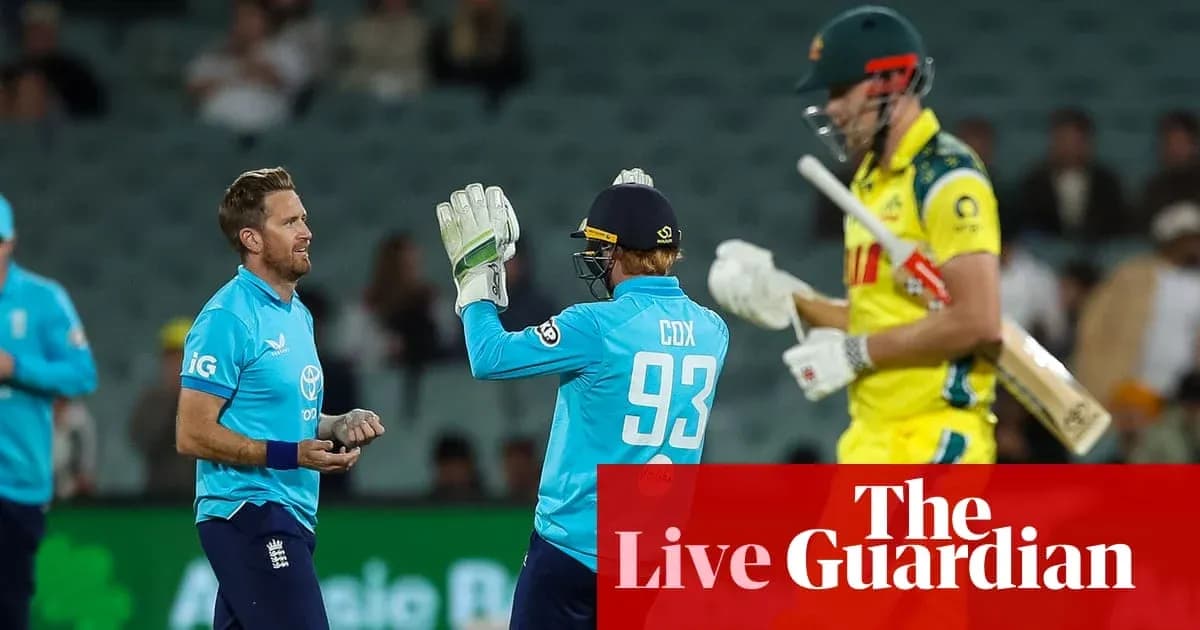
England’s batters stacked the runs, their quicks then ripped through Australia’s top order, and by the time the shadows lengthened in North Adelaide, a target of 356 looked like a mountain with no clear path up.
What began as a demanding chase has rapidly become a salvage operation.
England’s late surge sets the tone
England’s 6-338 was built on a brutal late surge that left Australia ragged in the field and short of answers with the ball.
Will Jacks anchored the back end of the innings, nudging his way to a composed half-century, reaching fifty with a simple single that underlined how firmly he had taken control. Around him, the chaos belonged to Australia.
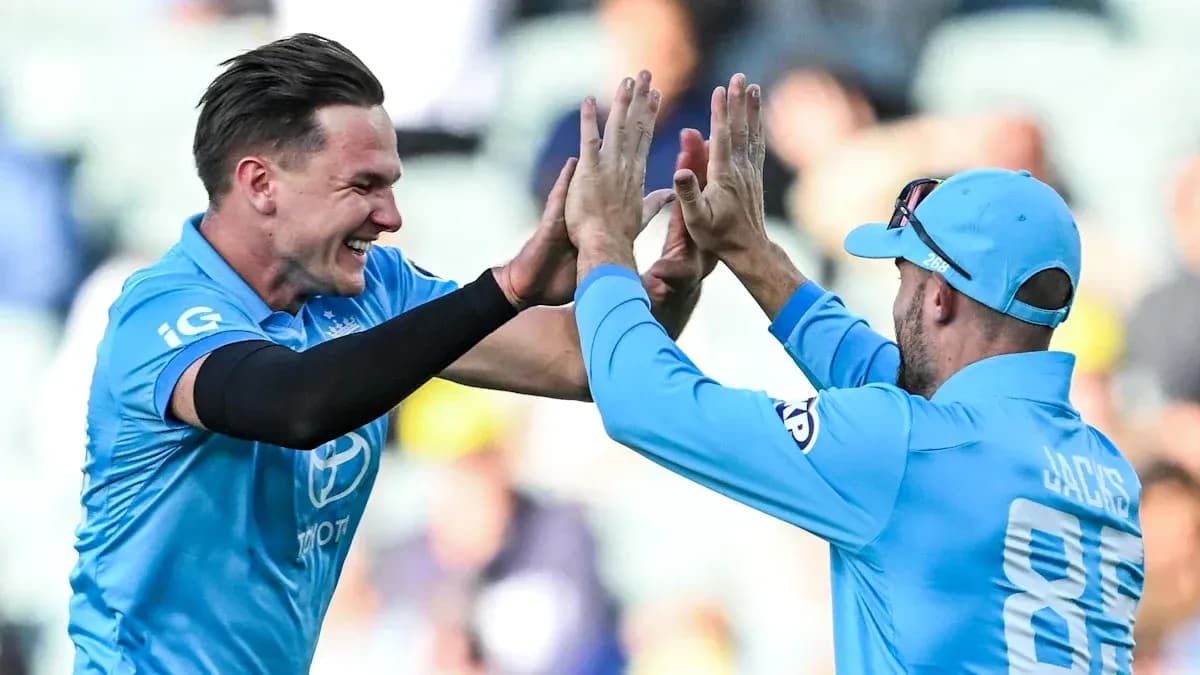
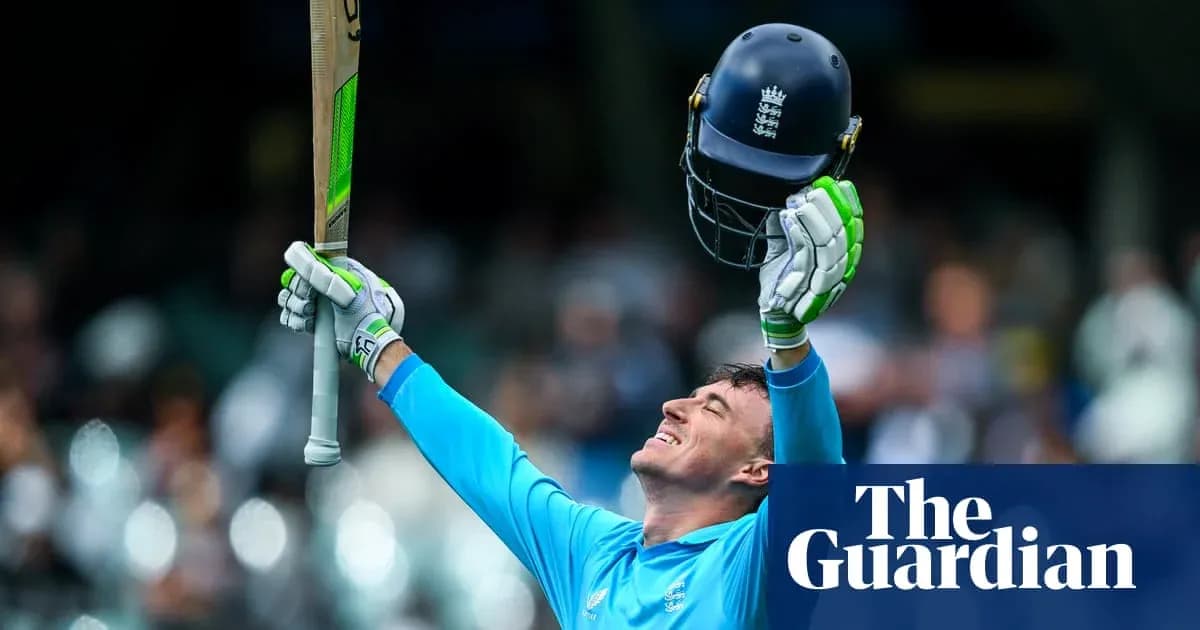
Before that, England had already surged past 300. A sparkling partnership between Jacks and Cox powered the innings into overdrive. Cox, inventive and fearless, unfurled a reverse scoop to the boundary, a shot that summed up England’s freedom at the crease. Their stand sailed past 100, and with it, England’s total ticked over the 300 mark.
Australia had chances. Adam Zampa put down Jacks when a wicket might have slowed the charge. Instead, the drop only emboldened England. Cox moved to 67 from 49 balls, his knock laced with clean striking and sharp running.
Then came a rare moment of Australian brilliance in the field. Bartlett, struggling for control and leaking two wides in the over, finally forced a miscued shot from Cox. Renshaw sprinted to the rope and produced a superb catch right on the boundary line. Cox’s dismissal at 67 felt like a necessary release valve for Australia, a wicket that threatened to cap England’s haul at something manageable.
England refused to ease off. Sam Curran joined Jacks, but the real late fireworks belonged to Gus Atkinson. With one over left, Jacks collected the single he needed for his fifty, then watched as Atkinson walked in and swung from ball one. After a first-ball swing and miss, Atkinson launched back-to-back sixes, an emphatic statement to close the innings and push England to 6-338 with two balls still to spare.
Australia trudged off knowing they had a score on their hands that demanded both composure and early momentum. They delivered neither.
Atkinson tears into Australia’s top order
Mitchell Marsh and Travis Head strode out needing a strong, authoritative start. Instead, they ran into Atkinson on a mission.
The England quick set the tone immediately. Marsh scratched his way to just two runs from his first eight balls, unable to break free as the required rate began to creep. Head, usually a tone-setter in white-ball cricket, needed four balls to get off the mark, then briefly threatened to ignite the chase. On his fifth delivery faced, he muscled his first six, a reminder of his power and the danger he poses when settled.
Any sense of rhythm vanished almost instantly. On the eighth ball of his stay, Head miscued. Atkinson found the edge, and Joe Root, stationed behind, took the catch with minimal fuss. Head departed for seven, and Australia were 1-13 after 2.4 overs, already wobbling.
Connolly joined Marsh, but Atkinson refused to loosen his grip. With the score on 2-23 after 3.1 overs, he struck again in almost identical fashion. Another chance, another catch, this time to Harry Brook. Connolly, gone for a duck from two balls. Two wickets in the over, Australia’s top order in tatters.
The slide didn’t stop there. Marsh, the captain and the man Australia needed to steady the innings, followed soon after. Baker came into the attack, found the edge, and Root again was in the game, pouching the catch to send Marsh on his way. Australia slumped to 3-13 after 3.3 overs. Three wickets had fallen for no runs in the space of six deliveries. It was carnage.
Renshaw and Inglis were thrown together in the wreckage, the scoreboard a bleak 4-29 after seven overs once Inglis fell. England reviewed for a possible dismissal; the decision went against Inglis, and he was gone for 3 from 5. The review only deepened Australia’s misery.
Missed chances and fading hopes
By the time Australia reached 4-50 after 11 overs, the equation was brutal: 356 to win, four wickets down, and England hunting relentlessly.
Renshaw offered resistance, moving to 24 from 26 balls, while Cameron Green tried to settle on 10 from 13. There were flickers of fortune for Australia. Root, who had been flawless earlier with the gloves in the field, almost claimed a third catch, but this time the ball slipped through his fingers and Inglis survived a delivery he probably shouldn’t have. For a brief moment, it felt like the game might tilt, just a fraction.
Then came the moment that summed up Australia’s day.
Atkinson, still bristling with energy, dug in a short ball to Green. The all-rounder miscued, and Liam Dawson settled under a straightforward chance. It should have been another wicket to Atkinson, another nail in the chase. Instead, the ball spilled from Dawson’s hands. Green stayed. England, so ruthless with bat and ball, showed they were human in the field.
Even so, the reprieve barely shifted the broader picture. With Renshaw on 24, Green on 10, and the scoreboard reading 4-50, that target of 356 looked no closer. Every dot ball, every tight over, dragged the chase further out of reach.
England had set the terms of this contest with the bat, then enforced them with the new ball. Australia, four down inside 11 overs and already clinging to slim hopes, now need something extraordinary from the middle order just to stay in the game.
On this evidence, extraordinary might not be enough.