The bruises from Perth were still fresh when England walked into Adelaide. By the time Will Jacks drilled the final ball straight back past the bowler, they had left Australia with a different kind of mark: 355 for 6, their highest ODI total on Australian soil, and the first time Australia have ever conceded 350 at home.
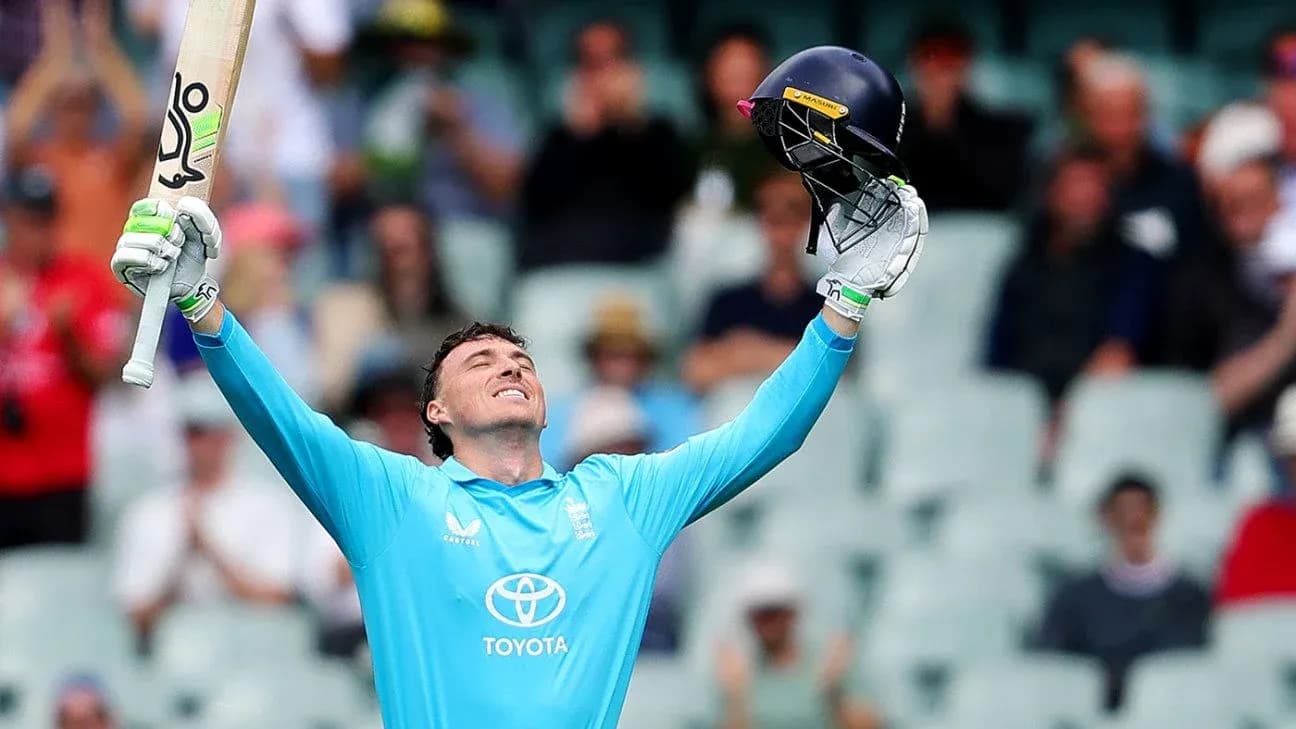
At the heart of it, a statement innings. Tom Banton, 121 from 99 balls, the knock of a man tired of waiting for permission to belong.
Banton answers the short ball – and the big question
His day started quietly enough, a flick off the pads in the second over to get England moving. The real ignition came with a blow to the helmet.
Spencer Johnson dug one in, sharp and awkward, smashing into Banton’s lid, dislodging the neck guard and leaving a visible mark on his cheek. Australia thought they had found a fault line in his technique. They went short again.
They misread the moment.
On Adelaide’s compact square boundaries, Banton turned the short ball into a scoring option, not a problem. Two fours and a six came from his next three pulls and hooks, and the pattern never really stopped. Ten of his 16 boundaries flew through the leg-side arc from fine leg to cow corner, all four sixes included.
He dominated the innings, but he also built it. After Ben Duckett scratched around for 9 before picking out point off Xavier Bartlett, Banton settled into a 137-run stand with Joe Root that reasserted England’s grip on the series after the Perth mauling.
Bartlett, Australia’s most incisive bowler on the day, eventually got his man with a short ball too, Banton top-edging to a diving Cameron Green at deep midwicket after back-to-back bouncers had both been launched for six. As vindication of a plan, it looked tidy on the scorecard. Out in the middle, it had felt like Banton had been the one dictating terms.
Root’s balance, then a rare rush of blood
At the other end, Root produced the kind of innings that has underpinned England’s white-ball surge for a decade. Calm, measured, beautifully balanced.
In his 201st ODI, he eased to yet another fifty – his 70th score of fifty or more – reaching it from exactly 50 balls. Front-foot drives, clips, and those late glides behind square gave the innings its shape while Banton swung harder.
When the pair pushed England to 150 in the 27th over, a first ODI hundred against Australia seemed almost inevitable for Root. The platform was perfect, the tempo controlled.
Then he blinked.
On 62 from 68, with England’s middle order fidgeting in the dressing room, Root tried to force the pace against Cooper Connolly. He chose the wrong ball to haul over the leg side, undone by extra bounce, and Liam Scott, on as a substitute fielder, pouched the looping top-edge at short cover. For Root, it was a rare lapse in judgment in an otherwise serene outing.
Harry Brook followed with less serenity and even less reward. He scratched around for 11 balls, then attempted a reverse ramp against Riley Meredith and succeeded only in cannoning the ball into the top of his own middle stump for 5. Another single-figure score for England’s captain on this tour, another self-inflicted wound after his rough treatment from Mahli Beardman in Perth.
At 175 for 3, Australia had a foothold. Mitchell Marsh had juggled his resources cleverly, using six different bowlers in a seven-over stretch to choke the tempo through the middle overs.
The game needed a fresh surge from England. Banton provided the first. Jordan Cox and Will Jacks supplied the rest.
Cox seizes his chance
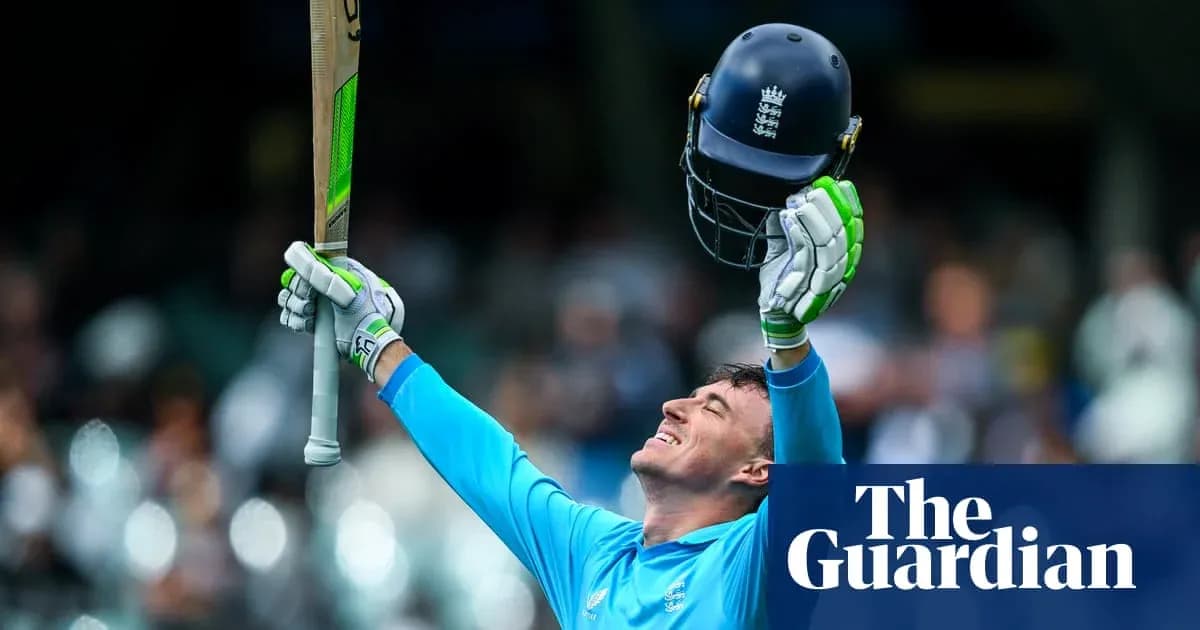
Banton’s second ODI hundred came in 86 balls, brought up with a back-foot punch to wide long-off off Adam Zampa. He paused, kissed the badge on his helmet, a small gesture that told a longer story – seven years on the fringes of England contention, now finally centre stage.
Cox knows that feeling of waiting too. With Jacob Bethell and Jos Buttler missing this trip, the door opened. He barged through it.
When the final powerplay began, Cox was 28 from 28, ticking along, waiting for the moment. Johnson’s return provided it. A brutal cover drive, then a deft ramp, and suddenly the tone changed again. He went after Jack Edwards too, a one-handed swat for six helping him race to a 39-ball half-century.
By the time he was done, Cox had 67 from 49, his second ODI fifty and a clear reminder to the selectors that his name belongs in any World Cup conversation, not in the margins.
Jacks finishes the job
Jacks played the foil, but a very modern one. He kept moving, kept looking for gaps, never letting Australia settle. He survived on 40 when Zampa leapt at short third and managed only to parry what would have been four more, but the escape only fuelled him.
He finished unbeaten on 54 from 40 balls, a clean, busy, intelligent innings that kept the rate high as Cox, Sam Curran and Gus Atkinson all swung freely.
Atkinson’s late cameo underlined the depth of England’s hitting. He launched consecutive sixes off Edwards in the final over of the seamer’s spell to push England beyond 350, a psychological marker as much as a numerical one on a true Adelaide Oval surface.
Jacks had the last word with the bat, driving the final ball straight back past the bowler for four. It was a fitting full stop: decisive, straight, no fuss.
Australia’s toil on a record day
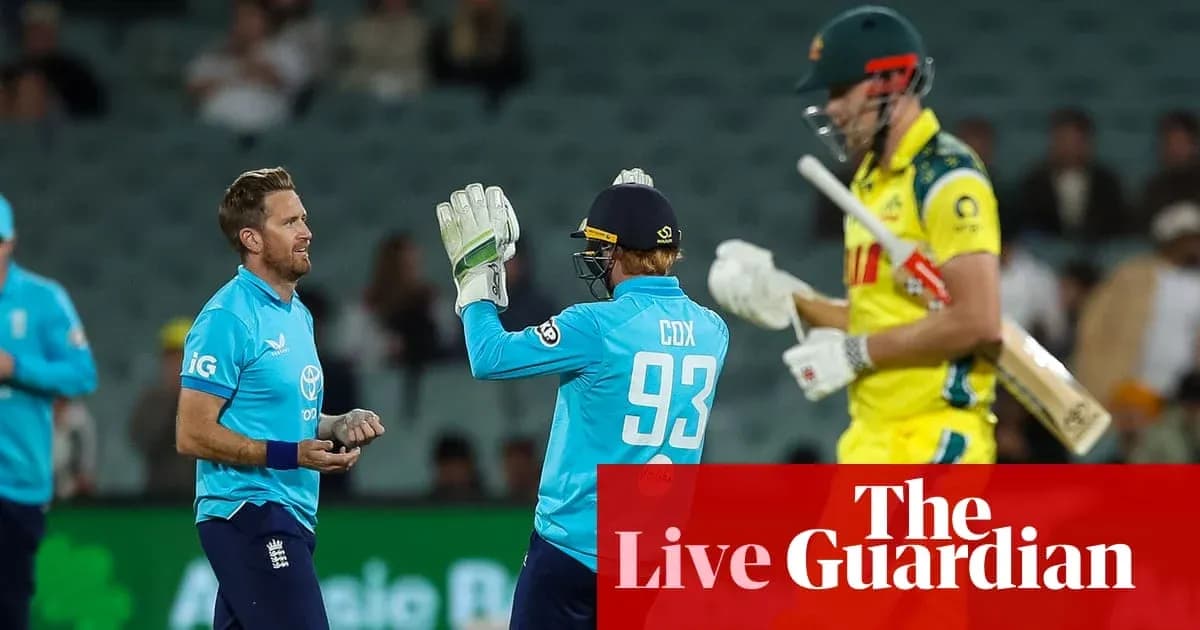
Australia did not roll over. Bartlett’s 3 for 72 gave their attack some bite, even if he paid for his aggression. He removed Duckett early, then both of England’s top-scorers, Banton and Cox, to keep the innings from becoming a full-scale rout.
Johnson, Meredith, Zampa and Edwards all had their moments, and Marsh’s willingness to shuffle his bowlers disrupted England’s rhythm for spells. But the numbers on the board told the story of the day.
England, battered in Perth, came to Adelaide needing a response. They delivered a record total, a new opening statement from Banton, and timely reminders from Cox and Jacks that their white-ball depth still runs deep.
Now Australia must chase 356 on their own patch to keep control of this series. On a ground that just watched its home side concede 350 for the first time, how secure will that record feel by the end of the night?