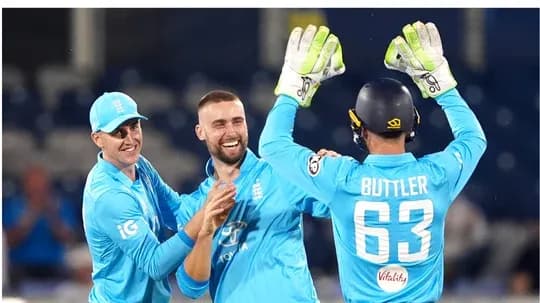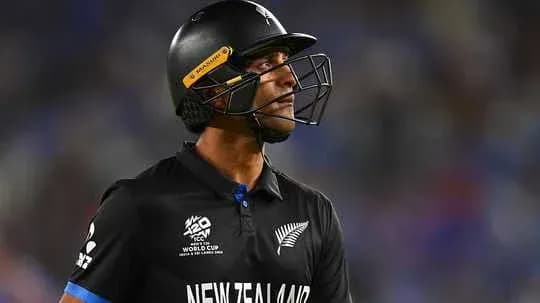
On a strip that looks like camouflage from the stands – green and brown blotches stitched together – England’s new-look top order went searching for rhythm, and Sri Lanka went hunting for a foothold.
Early on, the pitch showed its teeth. One ball scuttled low, an under edge cannoning into the slip fielder’s knee. Kamindu Mendis felt all of it, left wincing and rubbing the bruise as play moved on without sympathy. It was a reminder: this wasn’t going to be a carefree afternoon hit.
England’s makeshift pairing under scrutiny
England 17-1. Ben Duckett 5, Joe Root gone for 0. The numbers told one story; the context told another.
This was supposed to be Tom Banton’s opportunity. At 27, and in just his 26th List A appearance, he walked out as a man trying to remember an old language. One List A game since 2020, and now asked to open in place of the injured Jacob Bethell on a day made for runs at Chester-le-Street.
He had company in Duckett, another player chasing a bit of peace of mind. Duckett’s recent one-day returns have been lean enough for him to feel every ball. He got the gift he needed – a full toss early on – and tucked it away to settle the nerves. Not a statement shot. Just a breath.
The partnership itself was striking. Banton, tall and upright, loomed over the stocky left-hander at the non-striker’s end, offering the odd word as Dilshan Madushanka sprayed his first over. It had echoes of the old Crawley-Duckett “little and large” act. Different names, same visual.
Sri Lanka search for control
For Sri Lanka, this was supposed to be the reset. New format, new faces, a captain in Kusal Mendis who has been talking up his side’s balance and belief.
The T20s had been brutal: England 3-0, barely breaking stride. Yet in the rankings, Sri Lanka sit above England in ODIs, and they had edged their last 50-over series against Brook’s side 2-1 at home earlier this year. That matters in the dressing room. It feeds a quiet conviction.
Out in the middle, though, not everything matched the script.
“Dilshan Madushanka is getting it wrong,” observed Russel Arnold on BBC Test Match Special as the left-armer missed his lines and lengths. This was meant to be the spearhead, the early statement. Instead, he offered England’s openers breathing space.
Arnold’s point cut deeper. “That form is the weight what Sri Lanka carry. It is about starting quick, and feeling you're ahead of this English team and the feeling that you can knock them over.” The message was clear: against this England, you don’t ease into a game. You grab it.
At the other end, Asitha Fernando did exactly that. He bent one back into Banton, straightened him up, and drew praise from Arnold: “That was a tremendous delivery.” The ball did what coaches dream about and bowlers are told from their first net session – hit the top of off, or threaten it. Banton, slow to use his feet, looked exactly like a man reacquainting himself with the 50-over tempo.
A day made for batters – if they survive
The irony is that Chester-le-Street has become a haven for batters in this format. In each of the last six 50-over matches here, domestic and international, the side batting first has gone past 300. On paper, this is a ground where you cash in, not cling on.
The weather helped. The sun beat down, baking away any early moisture that might have offered the bowlers prolonged assistance. Arnold suggested the conditions may even have forced Sri Lanka into a late rethink on selection once they realised how quickly the surface would dry out.
Kusal Mendis, though, had already been clear about his side’s approach. “In one-day cricket we have a well-balanced side. Everybody in the batting line-up is really good. Last tournament, we did really well. I have confidence in my team. Five bowlers and six batters we're playing today.” It was the voice of a captain who believes this format suits his group.
He admitted he would have liked to bat first, only to watch his bowlers thrown the new ball instead. The task was simple in theory, unforgiving in reality: strike early, or watch England’s hitters stretch their legs on a ground that punishes anything loose.
England chase rhythm, Sri Lanka chase respect
For England, this wasn’t just another ODI. It was a laboratory. Harry Brook has spoken of treating 50-over cricket like an extended T20, but Dawid Malan, watching on, offered a more nuanced view: you have to rediscover the rhythm of the longer white-ball game, especially if you’ve lived almost exclusively in T20 for years.
Banton is the embodiment of that challenge. Once tagged as a white-ball prodigy, he now finds himself trying to stitch together a one-day career that never really got started. Duckett, more established but still restless for runs, knows the feeling.
So, as England moved from 1-0 to 5-0 to 12-0 and then 17-1, the scoreline felt secondary to the story. This was about two batters searching for certainty, against a Sri Lanka side desperate to prove that their ranking and their captain’s words carry weight outside their own shores.
The pitch will flatten. The sun will stay out. Someone, at some point, will cash in at Chester-le-Street. The question is whether it will be England’s experimental top order, or a Sri Lanka team trying to turn fragile optimism into something more substantial.