England finally bared their teeth in Adelaide. After days of head-scratching over a side that can look world-beating one week and bewildered the next, they produced a brutal, clinical 135‑run demolition of Australia to drag this ODI series level at 1-1 and force a decider in Hobart.
On a ground where they had lost seven in a row to Australia across formats, and just 48 hours after being skittled for 131 in Perth, England piled up 355-6 – their highest one-day total in Australia – then ripped through the hosts for 220 in 44.3 overs.
This was the version of England that keeps selectors hopeful and opponents wary.
Banton batters Australia into submission
Tom Banton has been waiting for a run like this. Given his chance at the top of the order because of Jacob Bethell’s knee injury, the 28-year-old right-hander is turning opportunity into a full-blown argument for permanence.
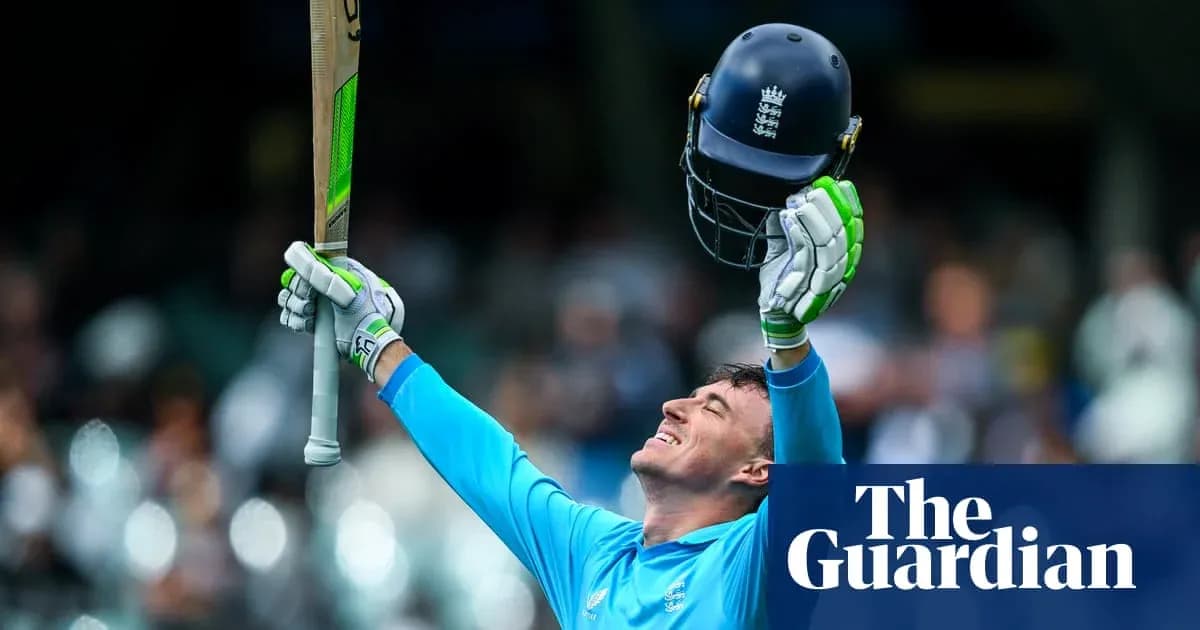
He made a superb 121, his second ODI hundred in just nine innings as opener, and the heartbeat of England’s imposing total.
It did not start comfortably. On 10, Banton took a blow on the helmet from left-armer Spencer Johnson, a sharp reminder of the risks at the top. He shook it off, reset – and then went after Adelaide’s short square boundaries with a ruthless pull shot that Australia never truly contained.
With Ben Duckett having slashed to point for nine, memories of the Perth collapse still hung in the air. Banton and Joe Root set about clearing them. Their stand of 137 was not flashy, but it was exactly what England needed: calm, measured, and quietly suffocating for Australia’s attack.
Root’s 62 gave structure, Banton supplied the tempo. He drove straight, rolled his wrists on anything short, and looked increasingly like a man in complete control of his game.
England did wobble briefly when captain Harry Brook, on five, tried to ramp and only succeeded in deflecting the ball onto his own stumps. At 3 down, with the innings delicately poised, Australia sensed a crack.
Cox walked in and slammed the door.
Cox and Jacks light up the death
Jordan Cox’s ODI audition has not always been convincing, but this was the night he reminded everyone why he is in the conversation to cover for Jos Buttler.
Coming in with time to bat, Cox unfurled a sparkling 67 from 49 balls, full of intent and invention. He drove and cut with authority, then began to raid the field with scoops and pulls. One outrageous reverse scoop for four off Xavier Bartlett underlined his confidence and eye for angles.
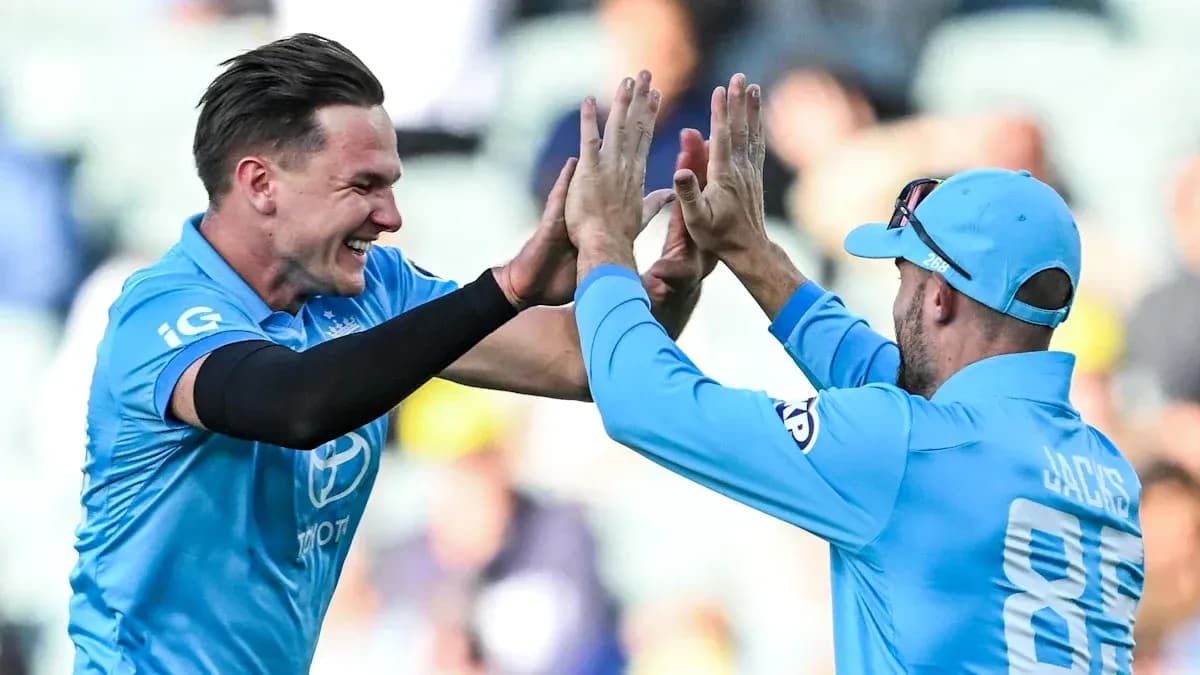
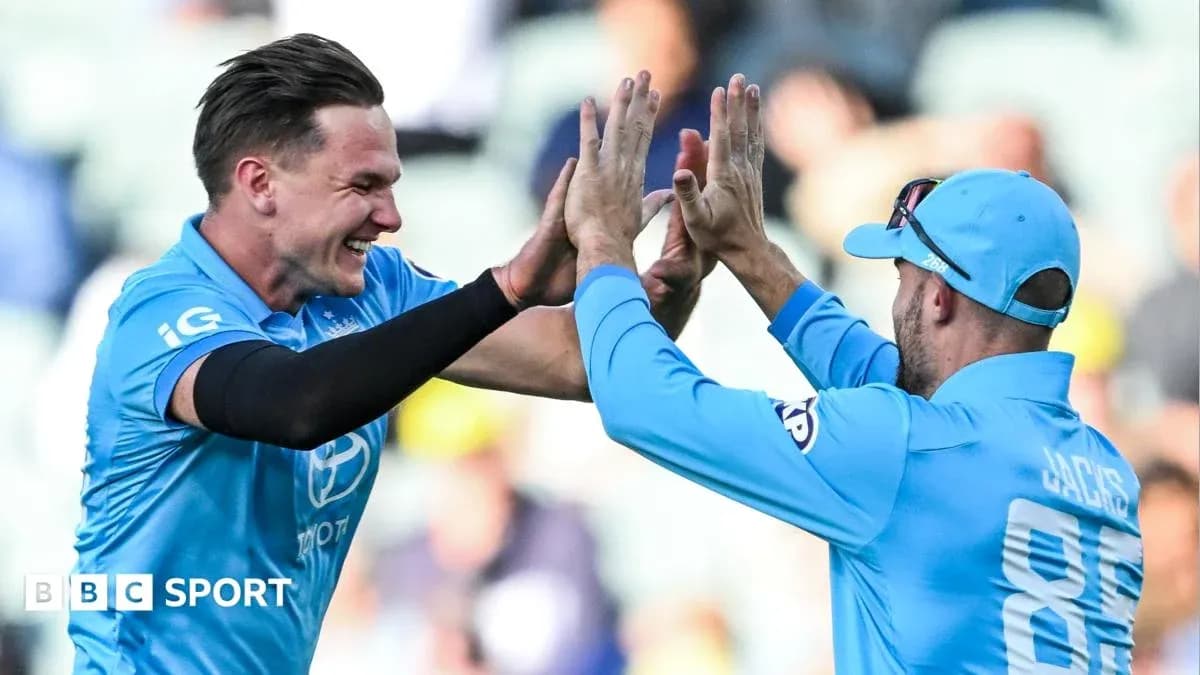
At the other end, Will Jacks played the perfect foil, finishing 54 not out. Together, Cox and Jacks turned a solid platform into a crushing total.
After 40 overs, England were 245-4 and ticking along at a run a ball. The final 10 overs yielded 110 runs. Australia’s bowlers, missing first-ODI match-winner Mahli Beardman, had no answers as the ball disappeared into every corner.
By the time Banton holed out at deep square leg after one pull too many, his work was already done. Cox and Jacks simply twisted the knife.
New-ball bite from Baker and Atkinson
England’s biggest problem in this format in recent months has been painfully obvious: they have not taken enough new-ball wickets. They failed to defend 430 against Sri Lanka last month. They were undone by a freak last-wicket stand against Pakistan. Too often, the opening overs drifted.
Not here.
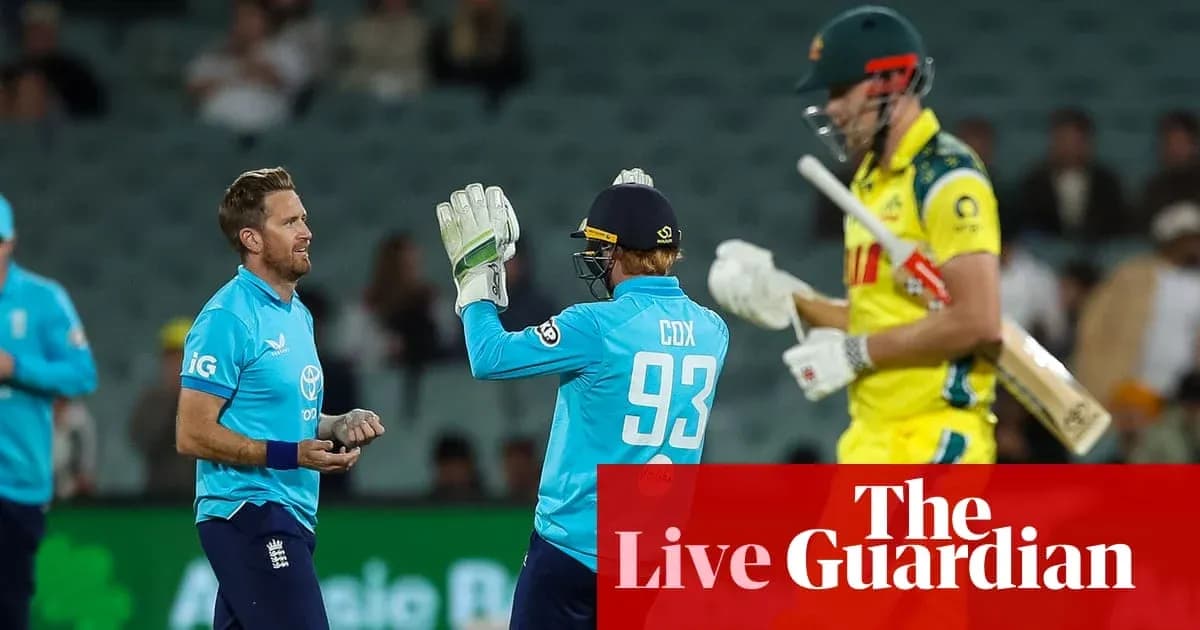
Sonny Baker, brought in for Jamie Overton specifically to address that issue, found genuine swing and immediate impact. He produced the key early moment by removing Australia captain Mitchell Marsh for two, Joe Root flinging himself high at slip to cling on.
From the other end, Gus Atkinson hunted edges with relentless precision. He nicked off Travis Head for seven – for the second match in a row – then added the scalps of Cooper Connolly and Josh Inglis, both caught behind.
Atkinson’s 4-28 were career-best figures and, crucially, a fair reflection of the threat he has been carrying for a while without full reward. Here, the numbers finally matched the menace.
Australia were 29-4 inside seven overs. The contest, in truth, was over there.
Imperfect, but irresistible
England did not produce a flawless performance. They dropped four catches, letting Inglis, Matt Renshaw and Cameron Green all off the hook. Renshaw and Green responded with 63 and 64 respectively, stretching the chase longer than it ever should have been.
Yet the pressure never truly lifted. Liam Dawson, again preferred to Adil Rashid, returned tidy figures of 2-41, squeezing through the middle overs and justifying the faith shown in him.
Sam Curran, under scrutiny after a poor run, found a much-needed late burst. He snared two wickets in two balls, including bowling Jack Edwards with his looping slower “moon ball”, a small but significant boost to his confidence.
Green’s dismissal summed up Australia’s night: stumped in freakish fashion when the ball ricocheted off Cox’s shin and onto the stumps. Nothing quite went their way. Everything England touched seemed to turn.
Australia eventually folded for 220. The margin – 135 runs – felt about right.
A team that still defies definition
What this result does not do is solve the riddle of this England side. Before the defeats in Rawalpindi, Lahore and Perth, they had already banked three ODI series wins this year. Then came the collapses, the missed chances, the defensive frailty.
Now this.
On nights like this, with Banton commanding the top of the order, Cox and Jacks tearing up the death overs, and Atkinson and Baker ripping through the new ball, England look like a team that can seriously trouble anyone at next year’s World Cup.
Banton’s numbers as an opener – four fifties and two hundreds in nine innings – are becoming impossible to ignore. The role should be his now. He looks settled, decisive, and, as Michael Vaughan noted, like a batter who has finally found his flow.
“He seems to have all the time, all the strokes,” Vaughan said on commentary, praising Banton’s pull, his straight driving, and his composure against spin. Crucially, Banton is scoring heavily without looking as if he is forcing it.
Cox, too, has at least one more chance in this series to strengthen his case, especially with Buttler still working back towards fitness and a South Africa series looming in January.
For now, though, the equation is simple. The series is alive. England, maddeningly inconsistent but undeniably dangerous, have earned themselves a shot at a statement win in Hobart.
The question is not whether they can produce a performance like this again. It’s whether they can finally make this version of England the norm, rather than the exception.