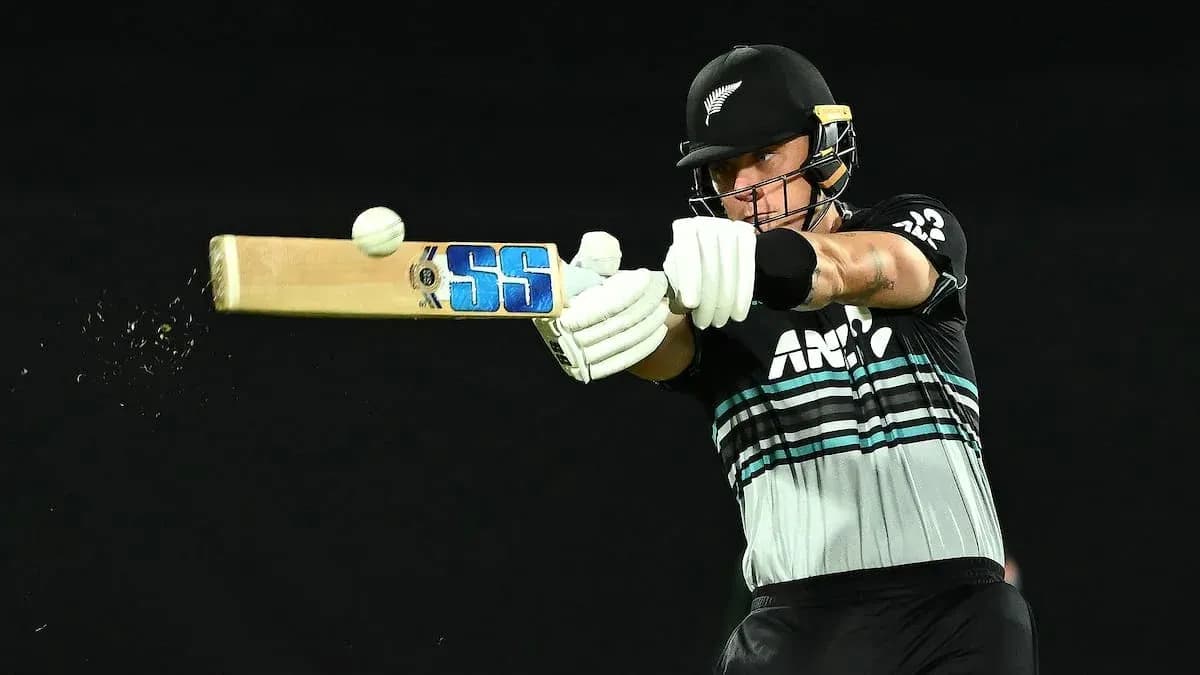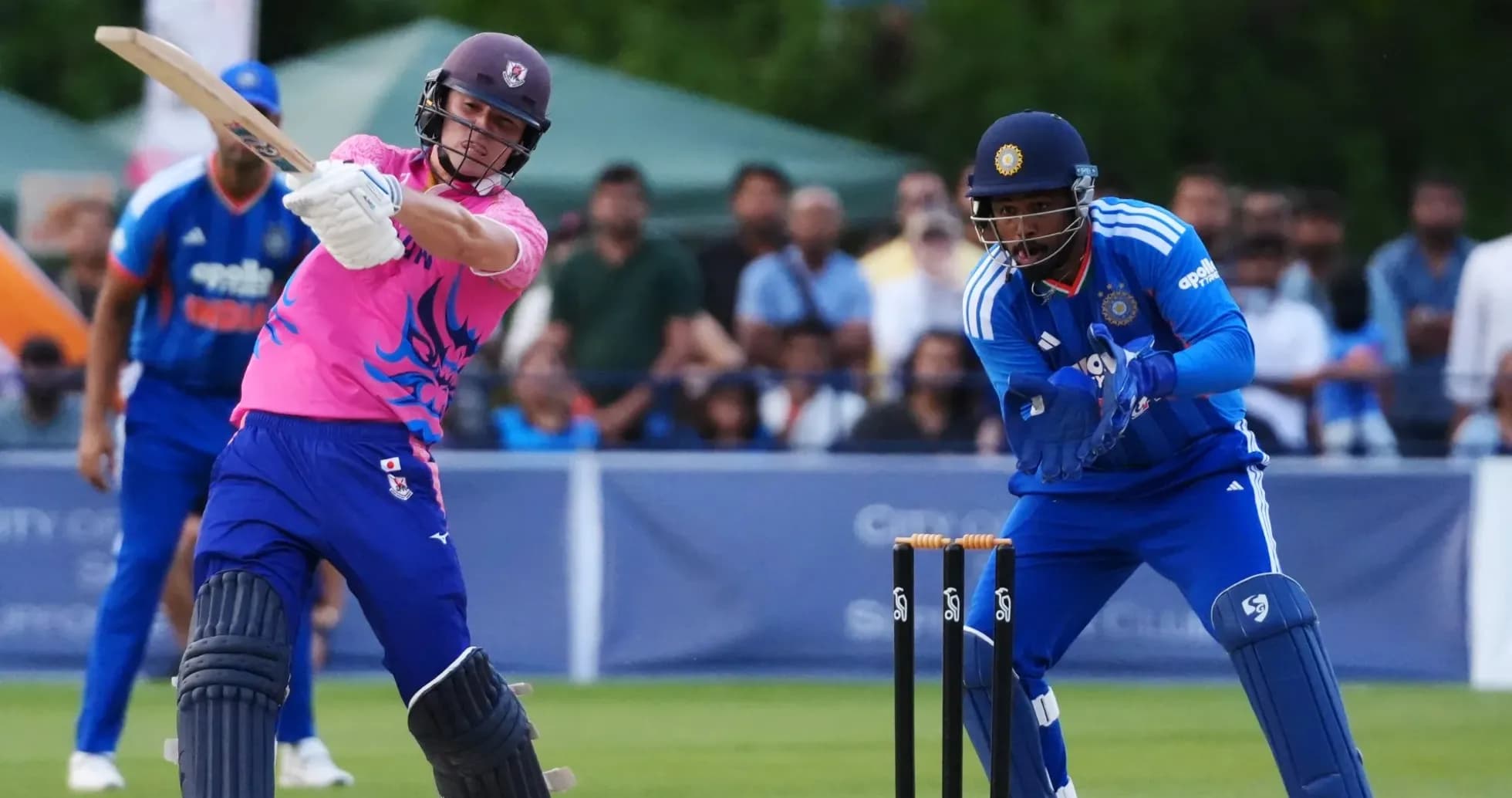
On a grey, rain-hit afternoon in Sano, a match that was supposed to be a gentle diplomatic warm-up erupted into one of the most contentious finishes cricket has seen in years.
India, world champions and three-time T20 kings, beat Japan by two runs in a five-over shootout at the Sano International Cricket Ground on Tuesday. On paper, it will go down as a narrow win over an associate nation ranked 41st in the world.
On the field, it looked and felt very different.
A mismatch on paper, a dogfight in reality
The rain sliced the contest down to five overs a side. Shreyas Iyer won the toss, batted, and India – loaded with star power – were expected to cruise to something unreachably high for a team with just 7,300 registered players and 16 cricket grounds in the entire country.
Japan did not read that script.
Charlie Hara-Hinze tore into India’s top order. He removed Abhishek Sharma in the first over, then came back to dismiss Ishan Kishan with the second ball of his next over. Two big names gone, and suddenly the giants were wobbling on a sluggish, low-scoring surface.
Iyer dragged his side to something workable. His 16 from 12 balls was hardly a headline innings, but in a five-over scrap it mattered. India closed on 32-4 – modest, awkward, and very much in range.
Japan walked out to chase 33 not with bravado, but with calculation. They knew the pitch, knew the opposition, and knew that if they stayed in the game, the pressure would shift.
Axar Patel opened with left-arm spin and struck in his first over, removing Lachlan Yamamoto-Lake with his fourth ball. Japan needed 31 from four overs. Tough, but not impossible.
Washington Sundar tightened the screw in the second, conceding just six and taking another wicket. India stayed with spin, sensing control, but Japan refused to disappear. Across the third and fourth overs they collected 17 runs and, crucially, captain Kendel Kadowaki-Fleming carved out 12 of them before falling. His dismissal hurt, yet it also underlined something: India were not strolling this.
When Patel took the ball for the final over, Japan needed eight runs from six deliveries with seven wickets in hand. The world champions were in a fight.
The over that changed everything
First ball: dot. The tension climbed.
Second ball: a single. Seven needed off four.
Then came the first flashpoint. Patel sent down a delivery that sailed past the batter’s reach and was called wide. Six required from four balls, plus the extra delivery. The pressure was now very much on India.
Alexander Shirai-Patmore took strike. Patel bowled again. The batter shaped for a reverse sweep, missed, and the ball again travelled outside his hitting arc. The umpire at the bowler’s end, Chris Thurgate, stretched his arms: wide.
That should have meant five needed off four balls, with Japan edging towards one of the great upsets.
Instead, the match exploded.
Iyer and Patel immediately challenged the call, visibly furious. They walked towards the umpire, gesturing and arguing. Thurgate conferred with his colleague, Chris Brown. There was no formal review, no signal upstairs, no replay on the big screen, no audible TV umpire.
After a brief conversation, the wide was revoked.
No extra run. No extra ball. The call simply vanished.
Japan, stunned, had to reset. They managed only three singles from the final three deliveries and closed on 30-3, two runs short of India’s 32-4. The margin was tiny. The anger was not.
Had the wide stood, Japan would have needed five from four with an additional ball in hand. The chase would still have been tight, but the equation – and the psychological balance – would have looked very different.
Laws, lines, and a missing explanation
The fury that followed was not just about one run in a low-scoring match. It was about how that run disappeared.
Cricket has a clear framework for overturning decisions. When an umpire’s call is reviewed – via the Decision Review System or through an umpire-initiated check – the process is transparent. The ball is replayed, the third umpire’s voice is heard on broadcast, and everyone in the ground can follow the logic.
None of that happened in Sano.
The umpires did not signal for a review. There was no visible evidence examined. One call was made, players protested, a short chat followed, and the decision changed.
The Laws of Cricket do allow a wide to be revoked. Law 22.3 states that a wide can be withdrawn if the ball touches the striker’s bat or person before reaching a fielder, or if the delivery is deemed a no ball. Neither applied here. The batter missed, there was no contact, and no no-ball signal.
That gap between what the law permits and what unfolded on the field is where the controversy has taken root.
Public confrontation with umpires has long been frowned upon in cricket’s culture. Yet in this moment, India’s captain and bowler pressed their case hard, and the on-field officials bent without any visible justification.
“Bullied” umpires and a global backlash
The reaction was immediate and brutal.
Cricket writers, former players, and fans lit up social media. Ben Gardner of Wisden labelled it a “disgraceful decision” and accused India of bullying the umpires into overturning the wide with “five off four needed for the biggest upset in cricket history”.
Others were even more direct. “Japan were robbed here,” wrote Abu Zaid Sarooji, echoing the sentiment of thousands who saw a smaller side denied a fair crack at history.
Even among Indian supporters, there was discomfort. Many pointed out that Shirai-Patmore had not altered his stance before the ball was delivered, so there was no attempt to manufacture a wide or trick Patel. To them, the original call stood on solid ground.
Inside the ground, the contrast was stark. India celebrated a narrow escape. Japan’s players walked off drained, shoulders low, their expressions telling the story of a chance that had slipped away – or been taken away – at the last moment.
Pride, diplomacy and a new frontier
When the microphones arrived, neither captain touched the controversy.
Iyer focused on conditions and context. “Honestly speaking, it was a very difficult wicket to bat on,” he said. “A five-over game, it can go anywhere. It doesn’t matter how good a team you are.”
He reserved special praise for Japan. “The attitude and approach the Japanese team showed today was impeccable, and kudos to them. Their approach was outstanding. I’m sure that they are on the right track.”
Kadowaki-Fleming spoke of pride rather than protest. “Emotions are running pretty high in our group. But the fact that we’re able to run the best team in the world, in my opinion, to the last ball of a game is pretty special,” he said. “I think today was a really momentous occasion in that it was the first time we were able to face a full member.”
The match itself was the product of years of quiet work. The Japan Cricket Association had spent more than a year trying to bring India to Sano, leaning on diplomatic channels, corporate backing and government interest to make it happen. This was no exhibition; it was a statement of intent about cricket’s future in Japan.
JCA chief executive Naoki Alex Miyaji had warned against expecting miracles from a single fixture. One game would not suddenly elevate cricket alongside baseball or football in the country. But he framed this contest as “the first page of a new era”.
On the field, his players almost turned that first page into a landmark chapter.
A result that will not rest quietly
For the record books, this will remain a narrow Indian win in a rain-shortened warm-up before the Asian Games. For Japan, it will be remembered as the day they pushed the world champions to the brink in their first-ever meeting with a full ICC member.
For the sport, the image that lingers is not a boundary or a wicket, but two senior Indian players remonstrating with umpires and a wide signal being quietly withdrawn.
In a corner of Sano, a young cricket nation showed it can stand toe to toe with the best. The question that now hangs over the game is whether, in the defining moment, the laws and the spirit of cricket stood with them too.