At a small ground in Sano, the world champions came within one delivery of a global embarrassment.
India, loaded with star power and reputation, scraped past Japan by just two runs in a one-off T20 reduced to five overs a side, a contest that turned on a single, fiercely debated wide in the final over.
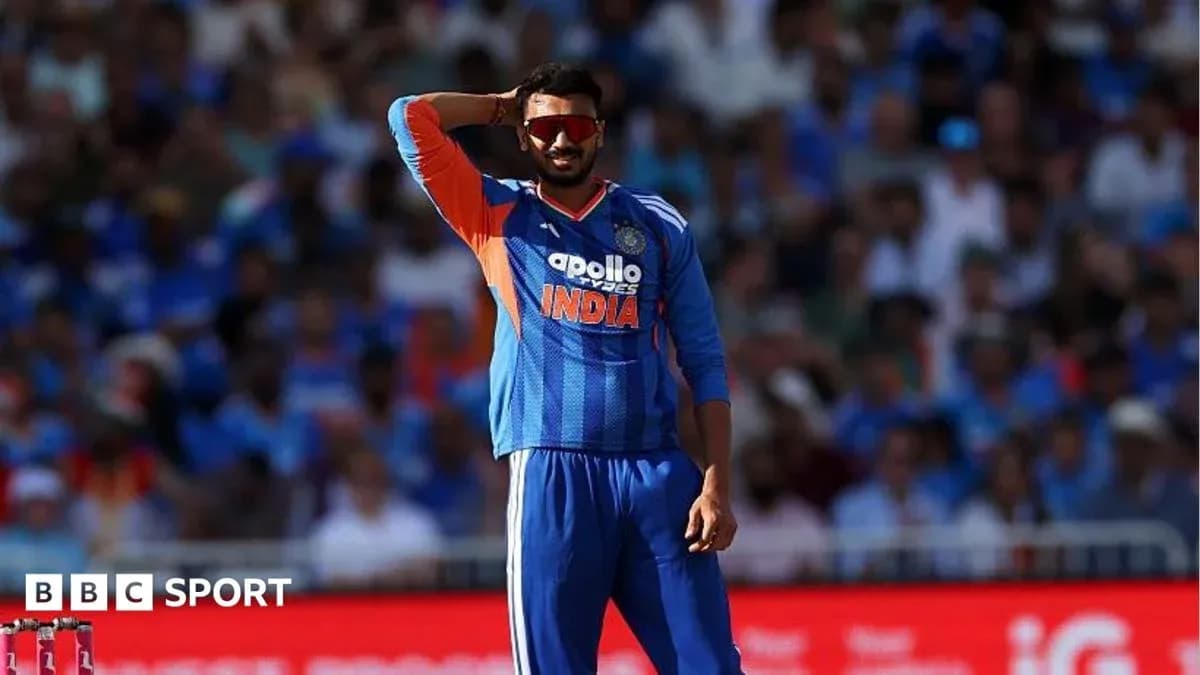
Japan, chasing 33, needed eight from the last six balls. Against Axar Patel, under lights and under pressure, they very nearly pulled it off.
The wide that wasn’t
With Japan closing in, left-hander Alexander Shirai-Patmore tried to outfox Axar. He shaped for the reverse sweep, switching his stance as the spinner fired one down the leg side – which, for a conventional shot, would have been called a wide every day of the week.
The square-leg umpire’s arm went out. Wide signalled. Japan now needed five off four. Axar’s reaction was instant and furious. Captain Shreyas Iyer joined him, both men striding towards the officials, gesturing, arguing the line and the law.
The umpires huddled. No DRS, no slow-motion replays, just two officials in the middle of a storm, trying to marry the letter of the ICC’s T20 playing conditions with what they had just seen.
Then came the twist. The wide was overturned.
The equation lurched back in India’s favour: six needed from three instead of five from four. A subtle shift on paper, a seismic one in a chase this tight.
Axar, now with room to breathe, nailed his lengths. Japan, who had dared to stare down the giants, finished on 30-3. Agonisingly short.
Law, spirit, and a grey area
In most white-ball cricket, anything sliding down the leg side is a gift: one more to the total, one more ball to face. But the ICC’s playing conditions for men’s T20 internationals carve out a specific exception.
Once a batter changes their hands or feet to play a reverse shot, they surrender that automatic leg-side protection. The wide is judged not by where a traditional batter would stand, but by where this new, reversed striker actually is.
The conditions state a wide should be called “if the ball passes wide of where the striker is standing, and which also would have passed wide of the striker standing in a normal batting position”.
On that basis, the officials, after their on-field conference, appeared to land on the correct technical decision. Yet the route they took to get there is what will echo: a signal given, then withdrawn, without any formal review mechanism in place.
The preamble to those same playing conditions leans on the “spirit of cricket”, with “accept the umpire’s decision” one of its central tenets. It is guidance, not law, but it sat uneasily alongside a reversal that changed the shape of the final over.
Japan’s near-miracle
For Japan, this was a night that began with a struggle and ended with a statement.
Their chase of 33 started badly. India’s attack, used to bullying far stronger line-ups, had them 8-2 after two overs. The game looked like a formality, the script already written.
Japan refused to read it.
They counter-punched, taking 17 from the next two overs to drag themselves back into the contest. Shirai-Patmore anchored the push, while Declan Kadowaki-Fleming’s 12 from 12 earlier in the innings had already given the chase some shape. At 30-3 with one ball remaining, they were one clean strike away from one of the great upsets in T20 history.
It never came. But the message was clear: Japan belong on this stage.
India’s batting exposed
None of this drama would have unfolded without an unexpectedly fragile effort from India’s batters.
Asked to set a total in a five-over shootout, they crawled to 32-4. For a side that routinely posts 200 in full-length T20s, it was a jolt.
Seventeen-year-old spinner Charlie Hara-Hinze lit the fuse. In a dream opening, he removed explosive opener Abhishek Sharma with his first ball, then kept squeezing, finishing with 2-17. Against a heavyweight batting order, those are grown-up figures.
India slumped to 14-3, the silence from their dugout almost as telling as the scoreboard. Only Shreyas Iyer found any rhythm, his 16 from 12 balls the lone innings with any fluency. It wasn’t pretty, but it was priceless. Without it, India would have been staring at something far worse than a narrow escape.
Axar’s closing spell – 0-7 from his two overs – completed the salvage job with the ball. In a game of 10 overs total, those numbers carried weight.
A first meeting, and a warning
This was the first time India and Japan had met in an international match. Japan have never reached a T20 World Cup; India sit at the summit as world champions. On paper, the gulf is vast.
On grass in Sano, it shrank to two runs and one overturned wide.
The game served as a tune-up for the men’s Asian Games starting on 24 September. For India, it doubles as a warning. Even in a five-over lottery, reputations do not guarantee comfort. Complacency almost cost them.
For Japan, it might just be a beginning. If they can push the world champions to the brink in a truncated shootout, what happens when they get more overs, more exposure, more nights like this?