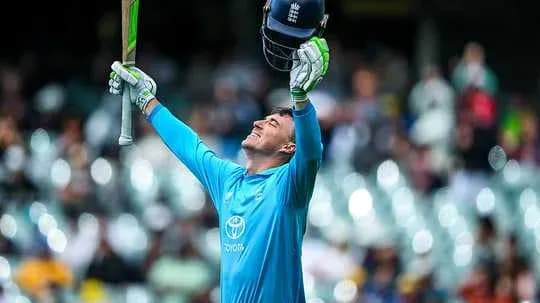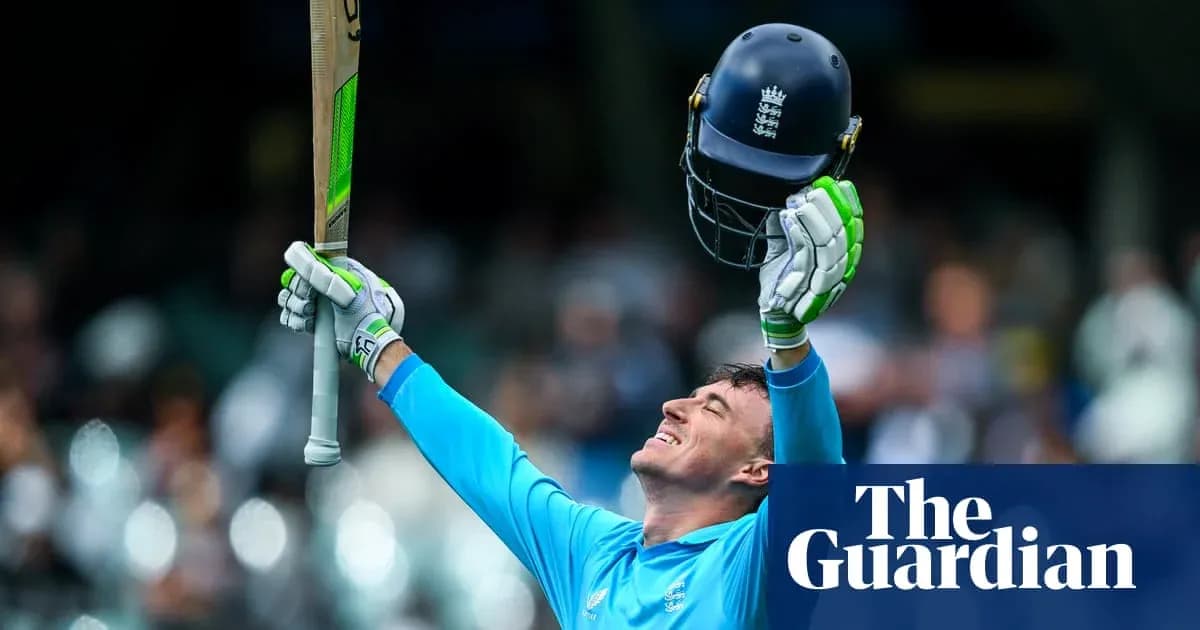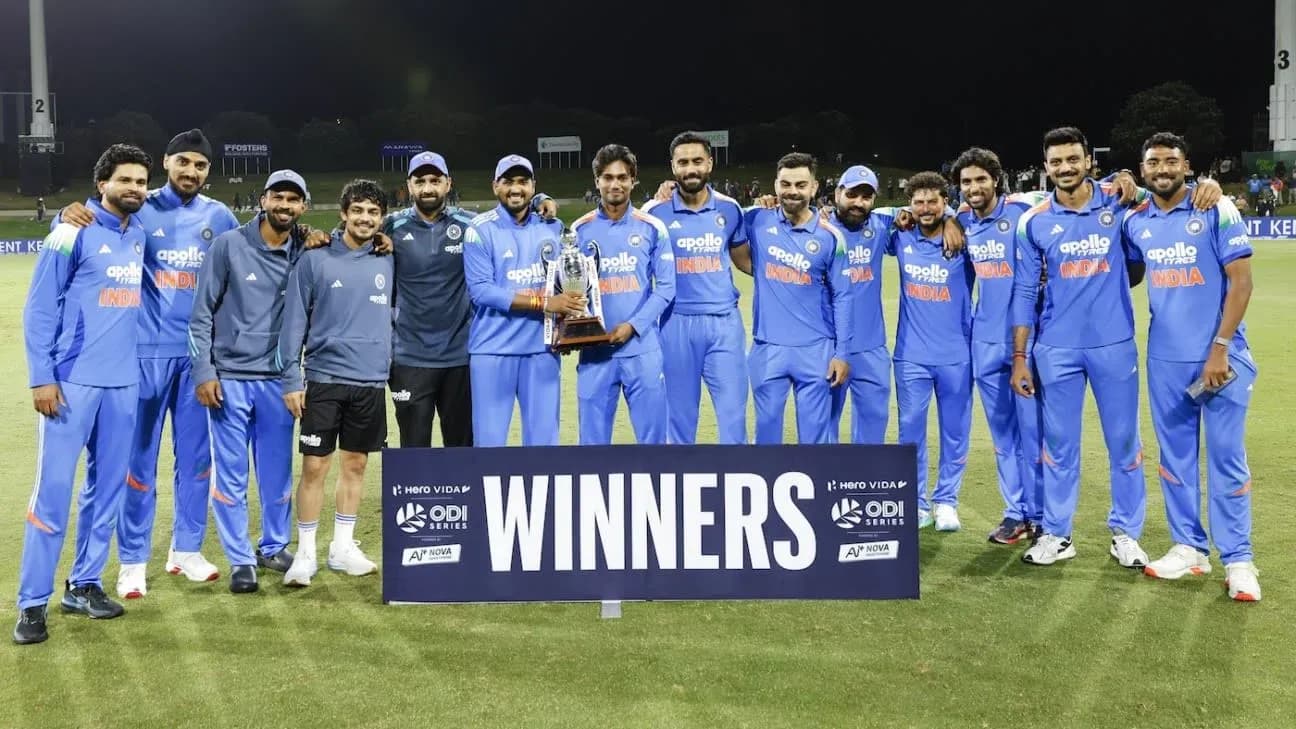
The series deserved a decider with nerve. What it got at Bay Oval was an Indian innings constantly on the brink, yanked back every time it tried to breathe, and finally strangled by New Zealand’s discipline and a surface that never stopped asking questions.
On a pitch that had already scarred India 24 hours earlier, the visitors lurched from one crisis to another, stumbling to 166/8 after 36 overs, their innings shredded by a superb spell from Mitchell Santner and a pack of seamers who never really let go.
A farewell that never caught fire
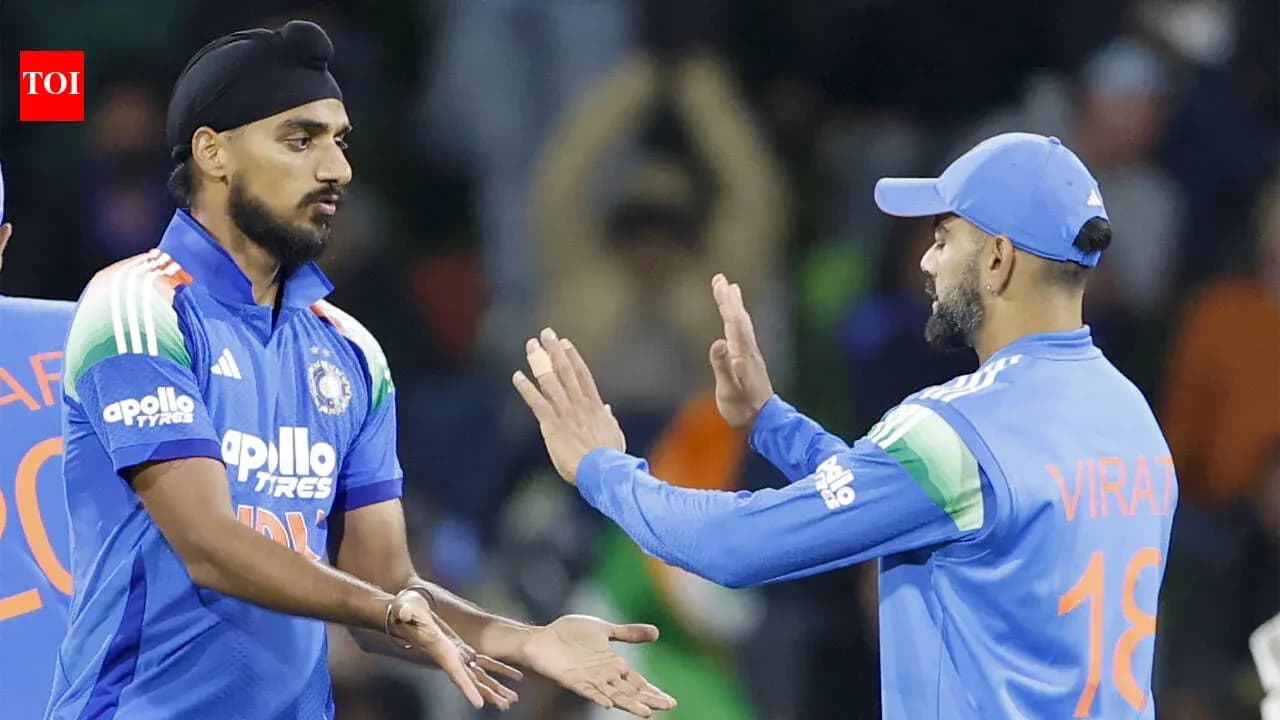
For Rohit Sharma and Virat Kohli, this was billed as a kind of curtain call in New Zealand. If this is indeed their last outing in the country in professional cricket, it will not be replayed fondly.
Rohit’s series ended as it had mostly unfolded: briefly, and without conviction. New Zealand stuck to a fuller length with Ben Fisher, took a bit of pace off, and Rohit flicked tamely to Dean Foxcroft at mid-wicket for 7 off 13. One more soft dismissal in a tour where he mustered just 30 runs in four innings, including two ducks. For a batter who once bullied these conditions, this was a quiet, almost subdued exit.
Kohli arrived with the memory of that 74 in Auckland still lingering, but his tour had already begun to fray. Fisher went short and wide, Kohli went hard. Too hard. The top edge flew, Tim Seifert sprang to his right and made no mistake. Kohli gone for 5 off 7, India 33/2, and the “Ro-Ko” farewell reduced to a cold, unforgiving line in the scorebook: 86 runs across five combined innings in the series, only one of them of substance.
Gaikwad’s chance slips away
With Shubman Gill missing the last two games, this was supposed to be Ruturaj Gaikwad’s audition as India’s back-up one-day opener. Instead, it became a missed opportunity he may dwell on for a while.
He actually began with a touch of fluency. A thick outside edge off Fisher that should have been regulation in the cordon raced to the rope, then a neat clip through mid-wicket followed. A crisp pull over mid-wicket later, and Gaikwad looked finally settled.
Then came Jacob Duffy. Fuller, nipping back, Gaikwad driving on the up. Thick inside edge, Seifert low and sure behind the stumps. Out for 23 across the two games in New Zealand, his only meaningful ODI score since late September still that 57 in New Chandigarh against West Indies. When India slipped to 37/3 in the ninth over, it felt like a familiar script: top order gone, middle order exposed on a surface with a mind of its own.
Axar holds the fort, then watches it crumble
The innings needed a grown-up. Axar Patel tried to be that player.
He arrived in the middle of the wreckage and did what he does best: absorbed pressure, picked his moments. New Zealand’s bowlers kept teasing the surface, the ball sometimes holding up, sometimes leaping, but Axar read length better than anyone in blue. A pair of boundaries off Blair Tickner and Kristian Clarke steadied nerves, then a crunching four through cover took India past 100. At 107/4 after 22 overs, India were still under the pump, but at least they had a platform.
He became the anchor around which the innings slowly rebuilt. A 34-run stand with Shreyas Iyer gave India their first real sense of order. Both had been shelled once — New Zealand’s slip cordon and ground fielding briefly human — yet the partnership grew, nudging and prodding the score to 68/3 by the 14th over.
Then, chaos. First, a power cut at the venue knocked out the main broadcast feed, leaving only a spare camera from deep cover to capture the action. When pictures returned, they brought bad news: Iyer, undone by a short ball from Tickner, picked out mid-on and trudged off for 22 off 26. The rebuild was cracked open again.
Axar kept fighting. A brace of boundaries, measured risk, plenty of strike rotation. He had faced more balls than any of his teammates, and looked the one batter capable of dragging India to something competitive.
Then the pitch bit back. On 46, Axar went for the lofted shot over mid-wicket, trusting the ball to come on. It didn’t. It held in the surface just enough, the stroke lost its power, and the ball floated tamely to the fielder. Bracewell wheeled away, Axar stared at the turf in disbelief. India 121/5 in the 25th over, their one pillar ripped out.
Dhir’s promise, Santner’s ruthlessness
With half the side gone, India retreated into caution again. Ishan Kishan, who had survived a nervy moment when Tickner’s short ball brushed his thigh rather than his bat, tried to hold the innings together. Naman Dhir joined him and, for a brief spell, the future looked a little brighter.
Dhir punched Santner for four straight after a break, timing and intent both clear. Ravi Shastri, on commentary, called him a “find” of the tour, praising his ability with both bat and ball. The label didn’t feel exaggerated. He looked organised, unhurried, and ready for a fight.
But this was Santner’s day, and he sniffed out any hint of momentum. He slowed one right up, tossed it a little fuller, tempted Dhir into the big shot over deep cover. The youngster committed, swung through the line, and found the fielder on the rope instead. Gone for 22, another partnership cut short. India 160/6 in the 33rd over, every step forward dragged back by a black-clad bowler.
The pressure finally broke the lower order. Auqib Nabi, in only briefly, pushed at Santner and offered a simple catch to Finn Allen at cover. Out for 5 off 9, India sinking at 166/7. One ball later, the New Zealand captain struck again. Yash Thakur, on debut and still to get off the mark, was beaten and sent back for a duck, Santner completing a double-wicket maiden that left Ishan stranded at the other end, watching his partners vanish.
At 166/8 after 36 overs, India’s innings was less a contest and more a survival exercise.
A surface that never forgave
All of this unfolded on the same Mount Maunganui strip where Matt Henry had ripped through India the previous day, taking six wickets and rolling them for 89 in a chase of 334. His opening spell then had evoked bitter memories of the 2019 World Cup semifinal. The question before this game was simple: would India find an answer to Henry and to this pitch?
They found neither. Henry didn’t need to reprise his demolition act this time; his colleagues shared the damage. Duffy’s movement with the new ball, Fisher’s hostility, Tickner’s persistence, Bracewell’s nous, and Santner’s command of pace and flight formed a suffocating web. Every time India tried to stitch something together, a mistake, a misjudgement, or a moment of skill from New Zealand ripped it apart.
Mohammed Siraj’s return and Yash Thakur’s debut with the ball were framed as part of India’s desire to test their bench. Siraj, as Iyer pointed out at the toss, has been waiting for a proper run in all formats. He will get his chance with the ball later. But as the Indian dressing room watched wicket after wicket fall, that plan felt secondary to a more urgent question.
On a ground that has exposed their batting twice in two days, and on a tour that has given their senior-most batters a brutal reminder of time’s toll, where does this one-day side go next?