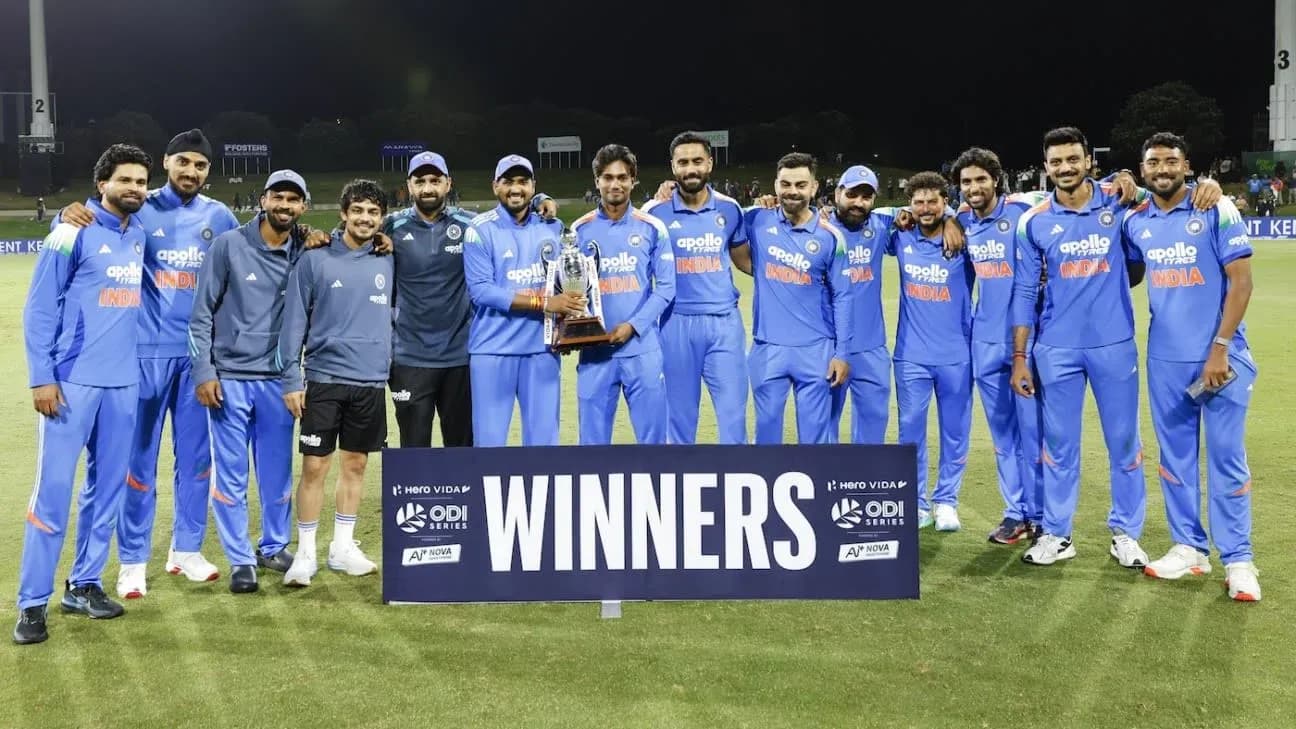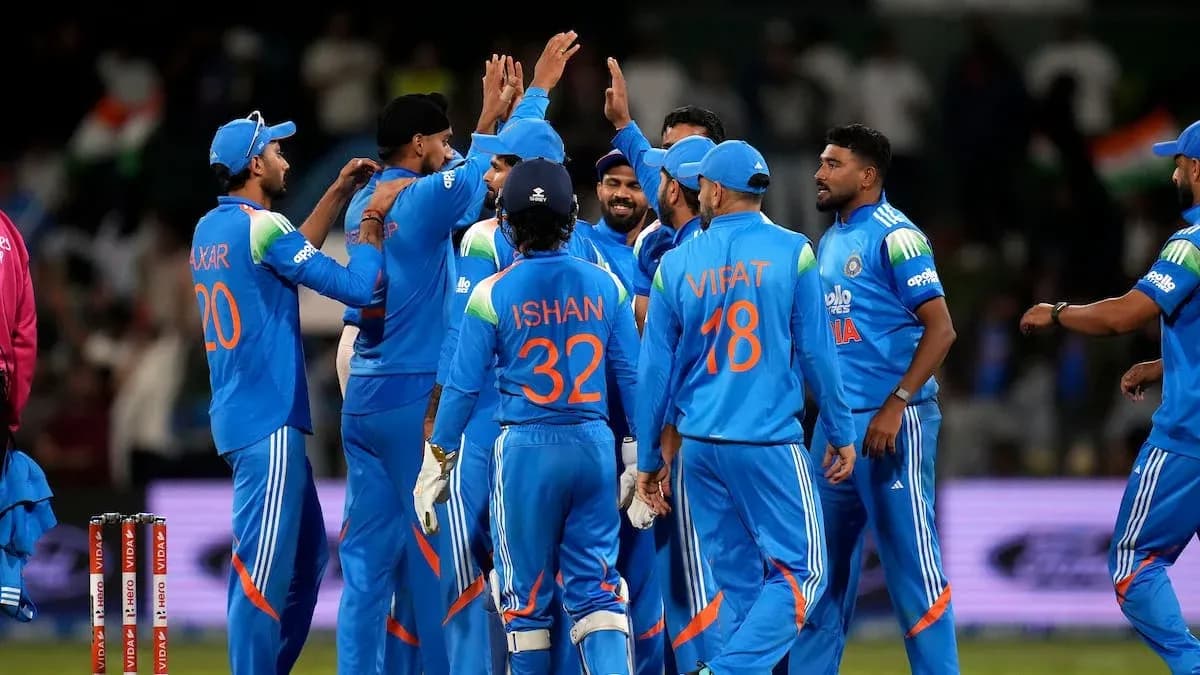
India left Bay Oval with more than just a series win. They walked away having snapped New Zealand’s proud home streak, banked a first bilateral ODI series triumph under Gautam Gambhir, and reminded the hosts that even a modest total can feel mountainous when the pressure is relentless.
The margin was 22 runs. It felt larger.
Rohit and Kohli’s quiet farewell, Henry and Fisher’s grip
For the thousands who packed the ground hoping for one last flourish from Rohit Sharma and Virat Kohli on New Zealand soil, the evening began with a jolt. The two giants, who have dominated so many nights in these parts, left almost as soon as they arrived.
After Matt Henry had embarrassed the pair with ducks in game four, it was Matt Fisher’s turn to spoil the farewell. He nicked off Kohli for five, then had Rohit taken at midwicket for seven. India slumped to 37 for 3 inside the powerplay, the atmosphere briefly stunned, Bay Oval sensing another home heist.
The Black Caps had their boots on India’s throat. They didn’t quite press down.
A counter-punch followed. Shreyas Iyer and Axar Patel stitched together 52 off 55 balls for the fourth wicket, turning a collapse into something more stable. New Zealand’s fielding, usually sharp, wobbled. Axar survived three chances, Iyer one. It was the kind of sloppiness that can haunt a chase.
Iyer never cashed in. On 22, he miscued a pull off Blair Tickner and picked out the fielder. Axar looked the part, moving to 46, only to pick out mid-on off Michael Bracewell. Each time India seemed to be climbing, they slipped.
Santner rips through, but Kishan and the tail bite back
At 166 for 8 after 36 overs, India looked finished. Their last recognised batter, Ishan Kishan, could do little but watch as Mitchell Santner’s first telling spell of the series ripped out the middle and lower order. Naman Dhir (22), Auqib Nabi (5) and Yash Thakur (0) all departed in the space of 11 balls, Santner’s left-arm spin suddenly dictating terms.
Kishan refused to fold. He cleared the ropes twice, picked gaps, and dragged the innings towards something workable. His 46 ended with a slice to third man off Jacob Duffy, Fisher again the catcher, and with that India’s hopes seemed to shrink with him.
The twist came from the tail. Arshdeep Singh and Mohammed Siraj added 26 for the last wicket, a stand that looked like a footnote at the time but became the night’s defining detail. Those runs nudged India past 200, to 209 all out. On a surface offering grip and the odd low bounce, it turned out to be plenty.
Santner finished with 3 for 47, Duffy matched him with 3 for 60, and yet the feeling lingered: New Zealand had let India hang around.
New Zealand’s chase unravels under lights
A target of just over four an over rarely frightens a modern batting line-up. New Zealand began as if they knew it. Tim Seifert fell for 14, but the plan was clear – let Will Young and Nick Kelly ride out the awkward twilight, then cash in once the lights settled and the ball softened.
Young, fresh from a career-best 125 in game four, did much of the early heavy lifting. He absorbed the new-ball heat, only to fall for 22 when Arshdeep drew a top edge and Ruturaj Gaikwad flung himself forward at deep backward square leg for a superb diving catch. Kelly, who had also done the hard graft, dragged on for 24, again to Arshdeep.
At 64 for 1, New Zealand had looked steady. At 83 for 4, they were in trouble.
Dean Foxcroft was reprieved on five when he edged to Kohli at second slip and survived, but Finn Allen didn’t share his luck. Siraj skidded one through that kept low and hit the stumps, Allen gone for one. The crowd, so buoyant at the start, grew restless.
Bracewell, playing his 50th ODI, was dropped on eight by Thakur in his follow-through. With Foxcroft, he added 36 for the fifth wicket, a partnership built on survival rather than swagger. India’s seamers pounded a nagging length, the required rate never an issue, the creeping sense of peril very much one.
The game sat on a knife edge. Then it tilted.
Bracewell, on 19, took on Nabi’s short ball and found the deep fielder. Next ball, Foxcroft, who had fought his way to 31, dragged on. Two wickets in two deliveries, and New Zealand slumped to 119 for 6, still 91 runs away.
Santner’s fight, Arshdeep’s finish
Santner and Kristian Clarke were the last recognised pair. They nudged and nurdled, watched the overs tick down, and forced India to turn to spin in the 36th over. The captain took a blow on the hand from Arshdeep but batted on, pain clearly there, resolve even clearer.
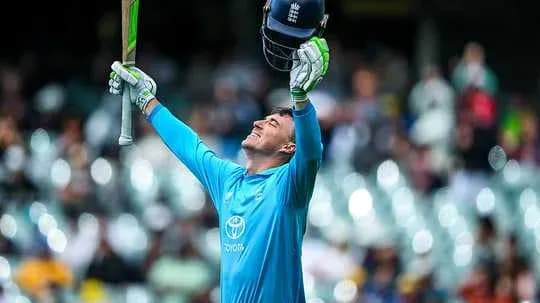
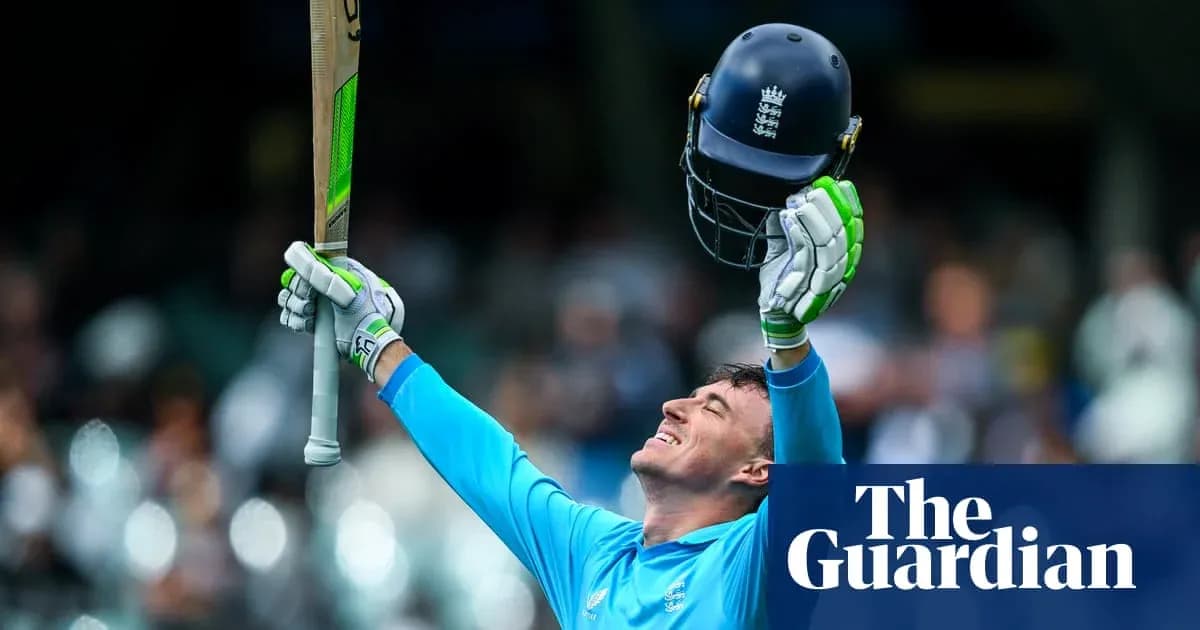
He counter-attacked. Twice he launched Axar over the leg side boundary, the second blow taking New Zealand to 150 and briefly reviving the chase. The crowd rose with him, sensing one final push.
Then he went once too many. Looking for a third six, Santner holed out on the midwicket fence off Dhir’s off-spin. His 150-hopeful charge ended, and with it, realistically, New Zealand’s night.
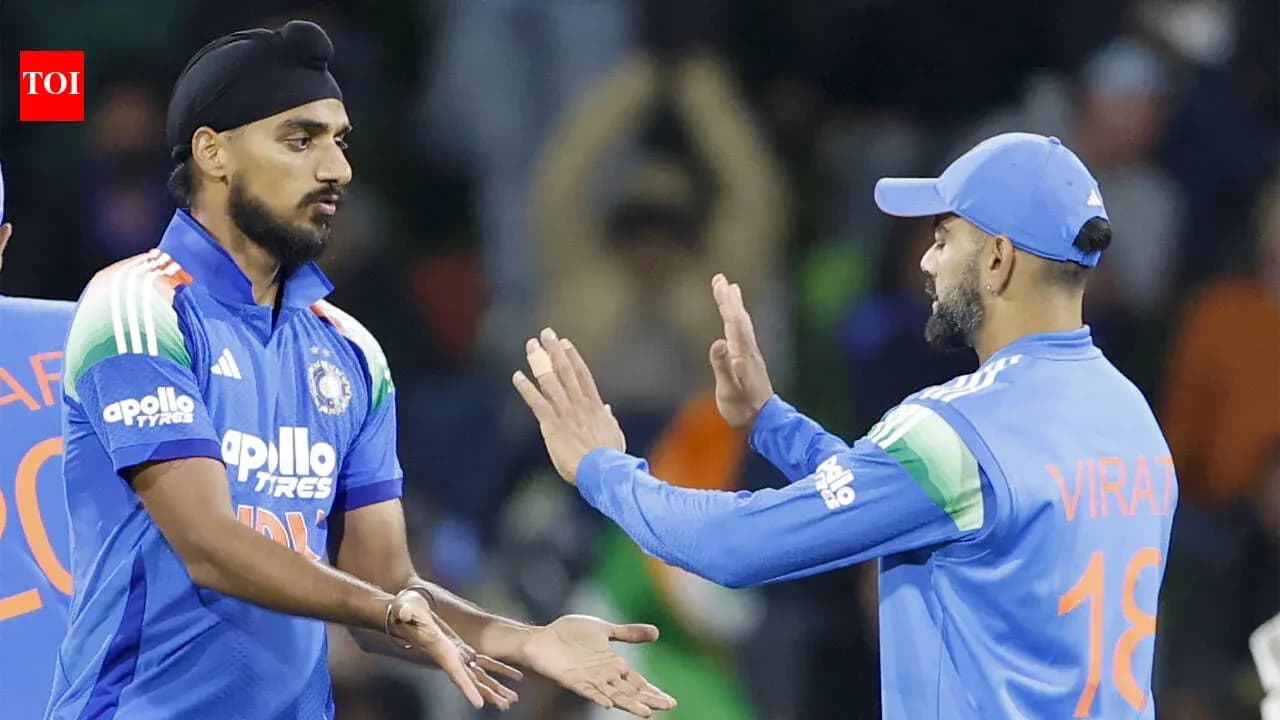
Clarke battled for 16, but Arshdeep returned to finish the job, finding the edge and sending him on his way. The tail never looked close to dragging the hosts back. New Zealand were bowled out for 187, Arshdeep leading the figures with 3 for 30, the architect of both the early damage and the final act.
India’s only misstep came off the ball – a slow over-rate that forced them to complete the Black Caps’ innings with an extra fielder inside the circle. Even that couldn’t loosen their grip.
So Gambhir’s tenure now has its first bilateral ODI series win, to sit alongside a Champions Trophy and a T20 World Cup already on his coaching résumé. New Zealand’s home aura has been cracked, their fielding frailties exposed, and their batting reminded that chases under lights demand ruthlessness.
Next stop is the Basin Reserve and the first of two Tests, with both sides braced for sweeping changes in personnel. The white-ball skirmish is over. The all-format battle is only just getting started.