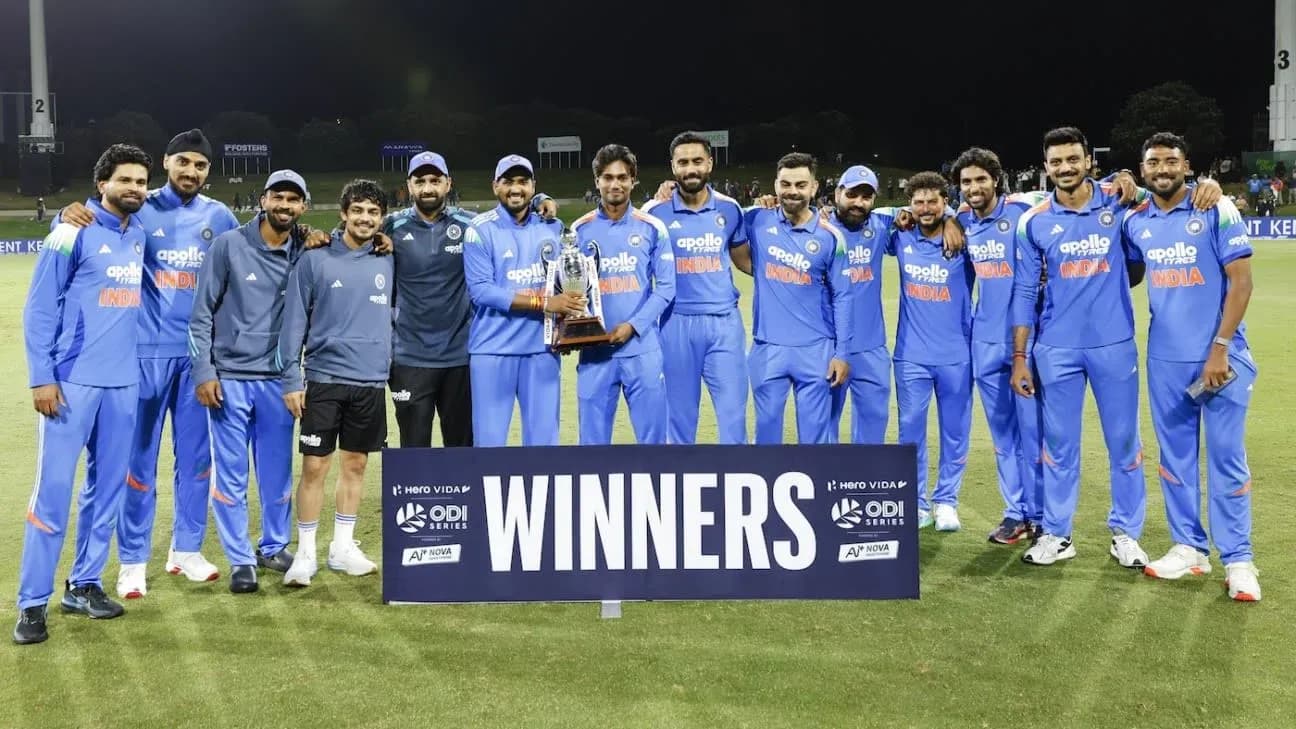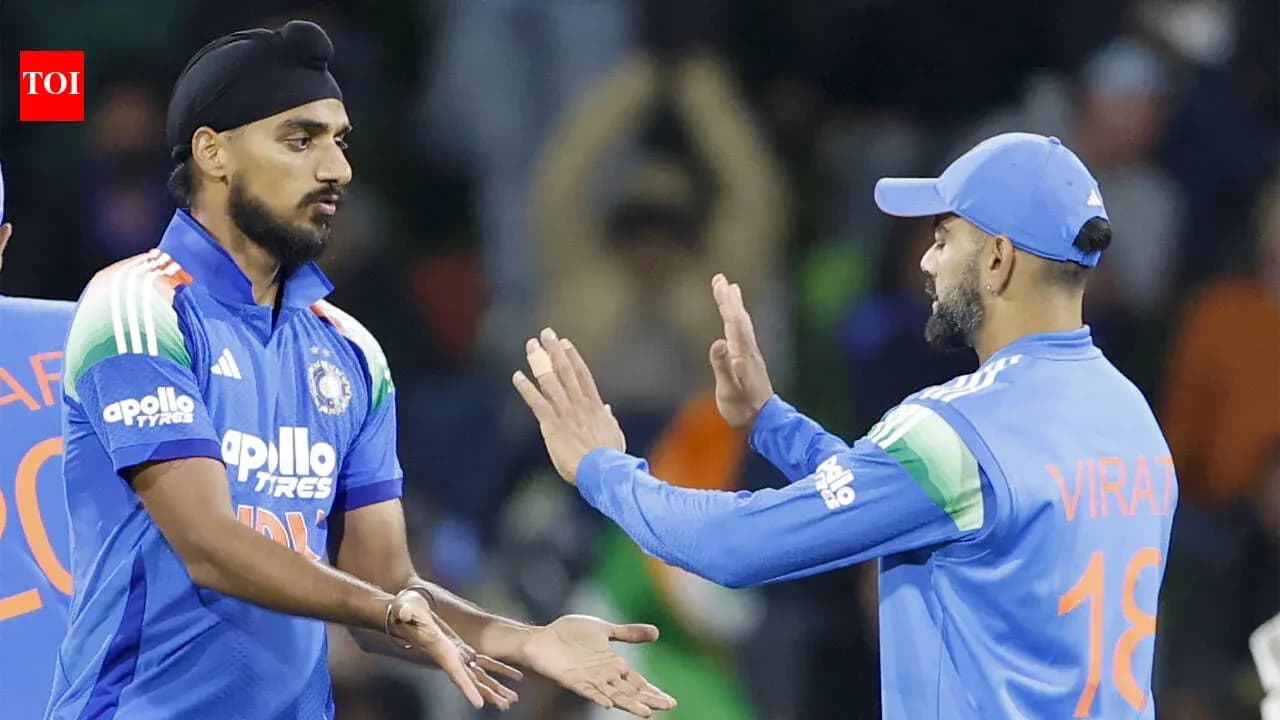
India’s under-19s pulled off a heist for the ages in Muscat, snatching the Asia Cup from Pakistan with a last-ball boundary. Yet as the dust settled on a one-wicket classic, it wasn’t the ice-cool finish that dominated the conversation, but the heat that followed.
A record-extending ninth Under-19 Asia Cup title, secured in the final over, should have been the headline. Instead, the manner of the celebrations dragged the spotlight away from a remarkable chase and onto a familiar, uncomfortable question: where does rivalry end and respect begin?
A final that refused to breathe
At the Oman Academy Cricket Ground in Al Amerat, the script veered wildly.
Pakistan, sent in after winning the toss, did everything a side could reasonably ask of itself in a final. Usman Khan’s 107 from 111 balls held the innings together, the opener pacing his knock with the composure of someone far older than his years. Abdul Qadir’s 80 and captain Farhan Yousaf’s 63 gave the total muscle and depth. By the time they closed on 337-9, they had piled up a score that looked, if not untouchable, then certainly imposing in a pressure game.
India needed 338 in 50 overs. Finals history says most teams crack long before that mark.
Yet their reply began with assurance. Captain Lakshya Raichandani played the sort of innings that keeps dressing rooms calm, compiling 80 off 101 balls. At the other end, Aaryavir Sehwag — carrying a surname that already weighs plenty in Indian cricket — batted with a freedom that belied the occasion. His 58 from 61 balls, laced with nine fours, drove the chase forward and underlined why he walked away as player of the tournament and its leading run-scorer, with 361 runs in five innings.
The platform was there. Then, suddenly, it wasn’t.
Wickets began to fall, the chase frayed at the edges, and Pakistan’s attack sensed blood. By the 42nd over, India had slumped to 252-8. From a position of control, they now stared at the kind of collapse that haunts young careers. The equation ballooned, the pressure suffocated. One more mistake and it was over.
Two boys, one partnership, and a tournament flipped
This is where Manal Chauhan and Mohit Ulva walked in and refused to accept the script.
Chauhan, from the lower middle order, counterpunched. His 47 off 32 balls was not just brisk; it was brave. He picked his moments, hit his shots, and dragged the chase back from the brink. Every boundary felt like a jolt of electricity through the Indian dugout.
Ulva, at the other end, did more than just hang on. He steered. His unbeaten 49 from 26 deliveries turned a desperate situation into a winnable one. He farmed the strike, trusted Chauhan, then took charge once the partnership settled. The pair stitched together a 57-run stand for the ninth wicket that broke Pakistan’s grip on the match.
When Chauhan fell, the tension returned. The game tightened again. It came down, fittingly, to the final ball: India needed three. Ulva, on strike, finished it with a boundary, sealing a one-wicket win and his own place as the last-ball hero of a gripping final.
“This tournament had not gone well for me, but I had belief that I would be able to deliver today,” Ulva said afterwards. He spoke of needing Chauhan’s support, of knowing it was his day, of the curious luck of batting at number 10. He also underlined a simple truth: on a flat wicket, if Pakistan could get 337, India believed they could get 338.
On the field, in cricketing terms, that belief was rewarded.
When celebration crosses the line
What followed the winning moment, though, jarred.
Instead of a release of joy directed inward — towards teammates, coaches, the dressing room — the celebrations spilled outward, and across the line. Cameras picked up Indian players turning their aggression towards Pakistan’s youngsters.
One Indian player was seen yelling and gesturing angrily in the face of Pakistan wicketkeeper Hamza Zahoor, who chose not to respond. Others kicked their legs in the direction of the Pakistan dressing room. Team management tried to pull their players away, but the images were already there, replayed and dissected.
The reaction was swift. India’s fight in the chase drew admiration, but their conduct after the win drew condemnation, not only from across the border but from many of their own supporters.
Former Pakistan captain Mohammad Yousuf cut straight to the heart of it in a post on X. He reminded the youngsters that they carry more than just a flag when they walk onto a field.
“You are not just representing your country. In fact, you are representing your upbringing, the values and the ethics your parents taught you as a child,” he wrote. Respect and composure, he stressed, must hold in victory as much as in defeat. True sportsmanship, he argued, lives in behaviour, not just in scorecards.
Plenty of Indian fans echoed that sentiment online. One called the scenes “uncouth, crass and downright disgusting”, pointing out that rivalry and intensity offer no excuse. “It’s a cricket match, not a war,” the supporter wrote, adding that a country’s sporting culture is revealed not only in how its players win, but in how they treat those who lose.
Former Indian cricketers and political leaders, while quick to praise the result and the comeback, largely avoided addressing the behaviour, leaving a vacuum that fans were more than willing to fill.
No handshakes, growing distance
The tension did not end with the final ball or even the celebrations. There was no customary post-match handshake between the sides — a ritual that has become increasingly rare in India-Pakistan fixtures as political strain seeps into sporting arenas.
This was not an isolated episode. Last year, during an Asia Cup clash, then-India captain Suryakumar Yadav and his team declined to shake hands with the Pakistan players and refused to accept the trophy from Asian Cricket Council President Mohsin Naqvi, who also serves as Pakistan’s interior minister.
The pattern has stretched across formats and genders. When Pakistan faced India in the ICC Women’s World Cup 2025 in Sri Lanka, the teams again avoided handshakes. They repeated the stance at the ICC Women’s T20 World Cup in England and in their Women’s Asia Cup group-stage meeting. In September, after winning the Asia Cup final in Dubai, the India women’s side again refused to receive the trophy from Naqvi.
In Oman, that broader backdrop hung over a group of teenagers who should, in theory, be the freshest canvas the sport has. Instead, they are already playing in an environment where even a handshake is freighted with political meaning.
A title, a warning, and the weight of surnames
Strip away the flashpoints, and India’s cricketing story from this tournament is impressive.
Aaryavir Sehwag’s runs, the leadership of Lakshya Raichandani, the presence of Anvay Dravid — son of former India captain and coach Rahul Dravid — behind the stumps, and the lower-order resistance from Chauhan and Ulva all point to a system still churning out players with both pedigree and temperament.
Anvay’s 19 in the final will barely register in the scorebook compared with the fireworks around him, but his very inclusion adds another familiar name to a new generation. For some, that’s a source of comfort and continuity. For others, it raises expectations before these players have even taken a step into senior cricket.
On the Pakistan side, Usman Khan’s century, Qadir’s 80, and Yousaf’s 63 deserved more than a runner-up medal. They built a total good enough to win most finals. They just ran into a pair of lower-order batters who refused to fold.
The cricket, then, delivered everything a final should: momentum swings, individual brilliance, tactical nerve, and a climax that will live long in under-19 folklore.
But the images that followed the last ball pose a harsher question for both boards, both dressing rooms, and the sport itself. If this is how teenagers are already learning to process victory against their fiercest rivals — with rage, not respect — what will the next decade of India–Pakistan cricket look like?