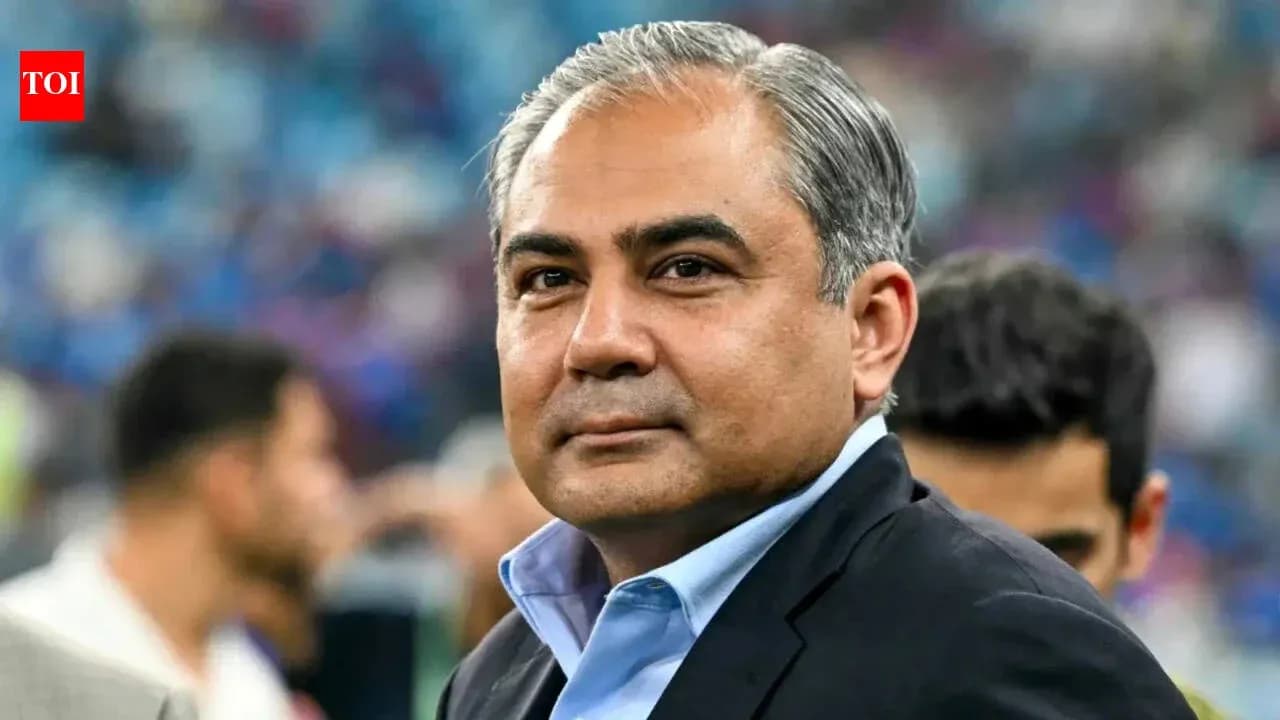
Mohsin Naqvi is not blinking.
With Pakistan battered in England, two Tests down and out of the series before the final match even begins, the Pakistan Cricket Board (PCB) chairman has doubled down on a sweeping reset that has stunned former players and fans alike. To Naqvi, the changes were not a gamble. They were, in his words, “essential”.
The backdrop is brutal. An innings defeat in the first Test, followed by a 194-run loss in the second, left Pakistan not just beaten but exposed. The response from the PCB was swift and ruthless. Seven players released from the Test squad in one stroke. A coaching reshuffle. A third Test at stake that no longer carries series jeopardy, but suddenly feels like a referendum on the new regime.
Naqvi, though, is standing in the middle of the storm and refusing to move.
“I Have Never Been Afraid of Criticism”
The backlash has been fierce. Former Pakistan cricketers have lined up to question the timing and scale of the overhaul. Analysts have accused the board of panic. Fans, already disillusioned by the team’s slide in the longest format, have flooded social platforms with anger and disbelief.
Naqvi’s response has been defiant rather than defensive. Speaking during the tour, he dismissed the noise around him and insisted the calls made were necessary for Pakistan’s long-term health.
“I have never been afraid of criticism, and I never will be. Those who say cricket has been destroyed since I came – look at what the rankings were before,” he said, as quoted by Geo News.
He did not shy away from the reality of Pakistan’s poor Test returns, but he pointed to a different story in white-ball cricket under his watch, highlighting improvements in the limited-overs setup as proof that the broader direction is sound.
Naqvi also hinted that his review extends beyond what happens between the boundary ropes. He made it clear he is looking at issues that run deeper than a misfiring Test XI, though he stopped short of airing those concerns now, saying it was not the right moment to discuss matters unrelated to cricket performance.
The message was clear: this is not tinkering. This is a reset.
Seven Out, A New Core In
The scale of the cull after the second Test told its own story.
Mohammad Rizwan, Imam-ul-Haq, Salman Agha, Ali Usman, Aamer Jamal, Awais Zafar and Khurram Shahzad were all released from the squad ahead of the third Test, starting September 9. These are not fringe names. Some are central figures in recent Pakistan sides, others were part of the supposed next wave. All are now on the outside looking in.
In their place, Pakistan have turned sharply towards youth and inexperience. Five uncapped players have been drafted: Arafat Minhas, Mohammad Imran Jnr, Saad Baig, Mohammad Imran Randhawa and Razaullah. Alongside them come Saim Ayub and Abdullah Fazal, who between them have only 10 matches of experience.
It is a bold move, and a risky one. England away is among the toughest environments in Test cricket, a place where even established players can look raw. Pakistan are choosing this stage to blood a clutch of new faces, with a series already lost and pride on the line.
To some, it looks like throwing youngsters into the deep end. To Naqvi, it appears to be the only way to force change in a team that has stagnated in red-ball cricket.
Coaching Clear-Out and a New Direction
The overhaul has not stopped with the playing group.
The PCB has also shaken up the coaching structure, pulling from within its white-ball setup to reshape the Test support staff. Mike Hesson has been brought in as head coach, while Ashley Noffke takes over as bowling coach. Both men are already embedded in Pakistan’s limited-overs plans, and now carry the dual responsibility of lifting a Test side that has lost its way.
Sarfaraz Ahmed and Umar Gul, who had been part of the previous coaching group, have been released from their roles. The decision underlines a clear shift: continuity for the white-ball project, fresh thinking for the Test team.
The move to lean on Hesson and Noffke suggests the PCB wants a unified philosophy across formats, but with a harder edge in selection and preparation. After two heavy defeats, Pakistan are not just changing personnel; they are changing the way the entire operation looks and feels.
A Third Test That Suddenly Means Much More
On paper, the third and final Test is a dead rubber. England already hold an unassailable 2-0 lead. The series is gone.
On the ground, though, this match has become something else entirely. It is the first glimpse of Naqvi’s rebuilt Test project, a trial by fire for a group of new and untested players, and an early examination of a revamped coaching team.
If Pakistan crumble again, the criticism will only grow louder, and the chairman’s conviction will face its sternest test. If the new faces show fight, even in defeat, Naqvi will feel vindicated in his belief that this was the moment to break from the old guard.
He has made his choice. The question now is whether Pakistan’s red-ball future starts here, or whether this brutal reset becomes another chapter in a long, uneasy story of change without stability.