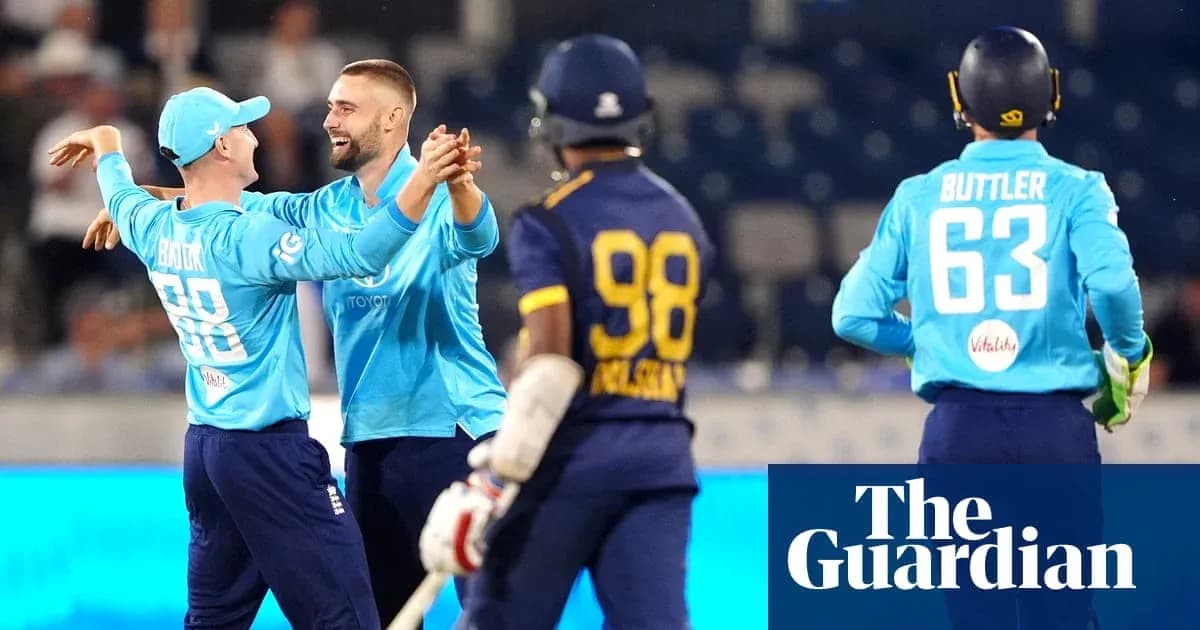
Harry Brook had spent the week talking about “high-octane” cricket. This was nothing of the sort. This was graft, adjustment, and then, slowly but decisively, control. On a used, end-of-season surface at Chester-le-Street, England traded fireworks for hard currency and still walked away with a 1-0 lead.
Bowled out for 265 in 48.1 overs, they looked light. Brook’s 67 was the spine of the innings, not its spark, and no one cleared the rope. Not once. For the first time in more than seven years, an England ODI innings passed without a six.
It did not matter. Sri Lanka never truly got close, bundled out for 176 as Will Jacks turned the match into his own personal showcase.
Jacks the vice-captain, Jacks the match-winner
If Brook is the face of England’s ODI reboot, Jacks is fast becoming its engine. Promoted to vice-captain, shunted down to a lower middle-order role he does not naturally crave, he responded with the most complete all-round performance of his international career.
With the bat, he finished unbeaten on 46, the difference between a vulnerable total and a comfortably defendable one. When England were stumbling from 182 for three to 211 for seven, losing four wickets for 29 in 46 balls, Jacks stood firm. He watched Jos Buttler fall, saw Rehan Ahmed run himself out with a moment of pure muddle, and simply recalibrated.
Then he went on the attack.
Eighteen runs came from the 48th over, Jacks finally breaking the shackles to drag England up to 265. Without that late burst, Sri Lanka would have sniffed an upset. Instead, they walked out chasing a score that always looked a touch steeper than the numbers suggested.
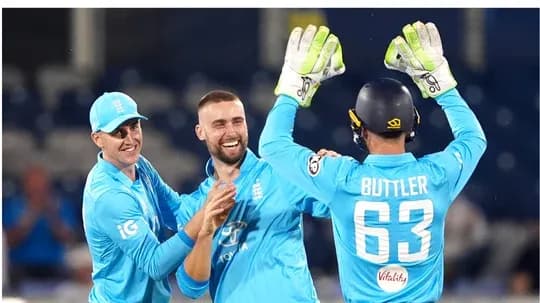
With the ball, Jacks was ruthless. Seven overs. Five wickets for 22. No frills, no part-time indulgence. Just clever, controlled off-spin that ripped the heart out of Sri Lanka’s chase.
He varied his pace, changed his angles, and kept the ball on a teasing line that demanded decisions. Most of them were wrong. Dunith Wellalage, Sri Lanka’s top-scorer with 45, was one of five to fall to him. The last, No 11 Dilshan Madushanka, had his off stump flattened by a ball that dipped, gripped and turned sharply. Jacks walked off with England’s second-best ODI figures by a spinner, behind only Vic Marks’s five for 20 in Wellington in 1984.
Brook was emphatic afterwards: this is no occasional tweaker. Jacks, in his captain’s eyes, is a “very good off-spinner” and a “very vital player” who has accepted the all-rounder’s burden without complaint. The evidence here backed every word.
Brook solid, Root’s run ends, and a village league wrist-spinner bites back
The innings that set all this up was, for long stretches, strangely subdued. Under warm September sun, England made 61 for one in the powerplay, Tom Banton bowled by a beauty from Asitha Fernando, and then found the pitch tightening around them.
Brook, though, looked in control. His 67 anchored the innings, a mix of crisp drives and controlled aggression that suggested he might bat through. He had looked immovable until he wasn’t, charging Dushmantha Chameera for one of his trademark inside-out strokes and instead skewing the ball to deep point. The moment he fell, the innings sagged.
Before that, Joe Root’s extraordinary run of ODI durability had finally ended. Root had not been dismissed in the format for 416 balls, a streak worth 404 runs stretching back to last winter’s 2-1 win in Sri Lanka. Here, he made 44 and then heard the death rattle, his off stump pegged back by a ball that dipped and straightened from a debutant many in England had never heard of.
Sachindu Colombage was the revelation of Sri Lanka’s day. A 28-year-old wrist-spinner with a jerky, deceptive action, he was playing for Downham Stow in the East Anglian Premier League last summer and owns a modest domestic record. Gary Kirsten, though, saw something more: drift, dip, and the kind of shape that troubles good players on slow pitches.
Kirsten was right. Colombage finished with three for 44 and two elite scalps. Root went to him. So did Buttler, lbw for 31, pinned on the crease by one that straightened. Later, Jamie Overton was bowled by a leg-break that climbed above his eyeline and then ripped back savagely. For a time, Colombage and the surface together dragged England back.
The numbers told one story. WinViz had Sri Lanka as marginal favourites at the halfway stage. The mood in the ground told another. This felt like enough.
Fielding lapses, Pietersen’s warning, and a chase that never caught fire
England did their best to complicate matters. The mini-collapse after Brook’s dismissal exposed old habits. Ahmed’s run-out was the low point: a direct hit from Charith Asalanka, but only because Ahmed set off for a non-existent single, realised too late, and then almost surrendered to his fate.
Kevin Pietersen, brought in as a mentor, had hammered home the need for better strike rotation before this series. This was the exact kind of moment he had in mind: pressure not from mystery spin or express pace, but from muddled thinking.
Still, Jacks and Gus Atkinson stitched things back together. They nudged, ran, and then, late on, hit out. By the time the innings ended, the equation looked more like a test of Sri Lanka’s temperament than their talent.
They never passed it.
On a pitch England knew intimately, Sri Lanka’s chase never had rhythm. Being on the wrong side of the toss hurt. So did the absence of any real platform. Brook’s attack, fresh from a summer of all-format duty, squeezed, probed and then pounced.
Jofra Archer, at the end of a demanding comeback season, took some punishment late on but the damage elsewhere was too great. Jamie Overton’s cross-seamers brought two wickets and constant awkward bounce. The missing presence of Adil Rashid, ruled out of the series with a hand injury, barely registered once Jacks began to turn the ball and the screw.
From the moment early wickets fell and the required rate crept, Sri Lanka looked like a side chasing not just runs but belief. Every time they tried to build, England chipped away. Every partnership felt one ball from collapse. Eventually, that ball kept arriving.
A quiet resurgence with louder tests to come
For Brook, this was win number 11 as England’s ODI captain, nudging his ledger into the black after 10 defeats and continuing a year of quiet repair in a format that had drifted. The World Cup looms in 12 months’ time. The volume will have to rise by then. Bigger scores, tougher opponents, harsher scrutiny.
Here, though, on a tired September pitch in the north-east, England showed something just as valuable as the pyrotechnics of the Twenty20 clean sweep: they won ugly, they won smart, and they won because their new vice-captain seized the game with bat and ball.
If this is what Jacks looks like in a supporting role, how central might he become when England’s World Cup plans truly sharpen?