On a grey, grippy afternoon in Chester-le-Street, England won ugly. That, right now, might be the most important thing about them.
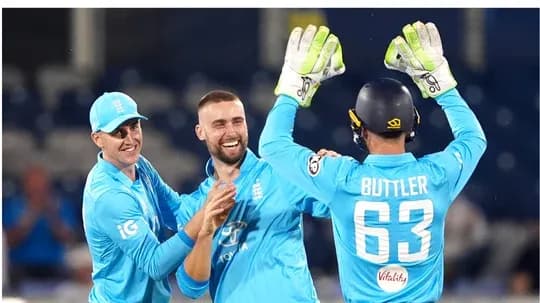
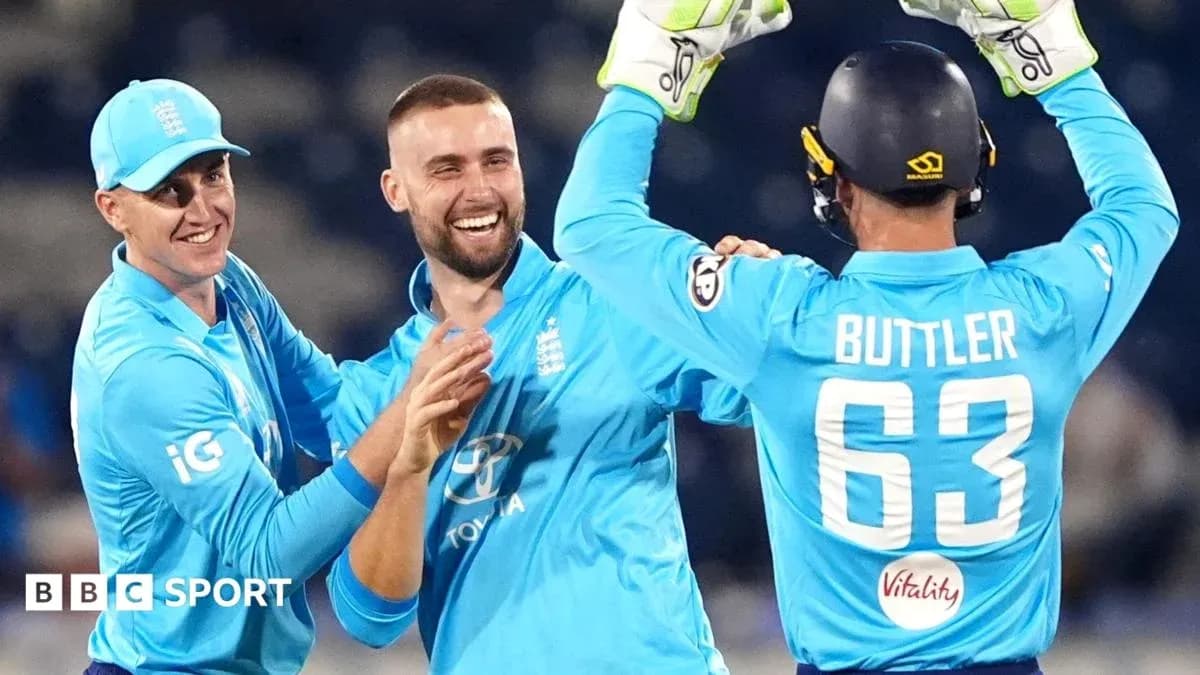
Will Jacks walked off with the ball in his hand, figures of 5-22 on the board and an 89-run win in the bag, the kind of all-round performance that anchors a side rather than decorates it. This was not a day of fireworks. It was a day of control, calculation and, when it mattered, ruthlessness.
The pitch was slow, the bounce fickle. England, sent in and forced to graft, never quite escaped its drag. They still found a way to 265, bowled out with 11 balls unused, a total that looked no more than par when Jofra Archer and Josh Tongue trudged off. It turned out to be plenty.
England ditch the six-hitting script
For the first time since 2019, an England side batting first in an ODI did not clear the ropes. Under Brendon McCullum, that has almost felt like heresy. Here, it felt like maturity.
Harry Brook set the tone. He has spent much of his young international career as an accelerator; at Chester-le-Street, he became an anchor. His 67 from 69 balls was measured, almost studious at times, as he picked gaps rather than fences and accepted that timing, not brute force, would be the currency of the day.
Joe Root, searching for rhythm after a patchy white-ball summer, added a neat 44. Together, they built something solid rather than spectacular, nudging England towards a platform that should have launched a familiar late assault.
Then, in the space of a few overs, the innings sagged.
From 182-3, England slipped to 211-7, a middle-order collapse of 4-29 that reopened all the old questions. Brook, the one batter to fall playing an overtly aggressive stroke in that passage, sliced a drive to deep cover just as he seemed to have mastered the conditions. Around him, Sri Lanka’s bowlers, sharper and more disciplined than they have been for much of this year, squeezed.
On debut, Sachindu Colombage was the standout. The leg-spinner found just enough grip to disturb England’s plans and their stumps. He snaked one through Root’s defences to hit off stump, trapped Jos Buttler lbw for 31, then beat Jamie Overton with a googly for eight. His 3-44 was the kind of spell that changes games, or at least should have.
It didn’t, because Jacks refused to panic.
Jacks holds the innings, then rips through Sri Lanka
At 211-7 in the 39th over, the temptation for a player of Jacks’ natural aggression is obvious: swing hard, hope it sticks. Instead, he chose the longer route. He farmed the strike, picked off singles, and waited for his moment.
It finally came in the 47th over, when he took 18 runs and threatened to drag England towards 280. Just as he was ready to unleash fully, Asitha Fernando, who had earlier trimmed Tom Banton’s bail with a lovely piece of new-ball seam for 10, found late reverse swing to knock over Archer and Tongue. England’s innings ended at 265, Jacks stranded on 46 not out, a job only half-finished.
The other half began with the ball, and it was devastating.
Sri Lanka, who had fielded with far more bite and energy than in their recent encounters with England, simply never matched that intensity with the bat. Chasing 266, they retreated into themselves. On a surface that demanded conviction, they offered caution.
England’s seamers set the tone, hitting that awkward length and letting the pitch do its work. The run rate crept up, the pressure mounted, and when Jacks entered the attack, Sri Lanka were already on the back foot.
He did not waste the invitation.
First came the big scalps: Kusal Mendis and Charith Asalanka, two of Sri Lanka’s key middle-order hopes, both undone by Jacks’ subtle variations and the slowness of the surface. From there, the innings disintegrated. The off-spinner worked through the tail with clinical efficiency, his 5-22 a career-best that underlined his growing stature in England’s white-ball plans.
Only Dunith Wellalage offered resistance, his 45 from 36 balls a brief flicker of defiance. He struck the ball cleanly, used his feet, and hinted at what might have been had others shown similar intent. Around him, wickets fell too regularly, Sri Lanka all out for 176 in the 37th over, their challenge over long before the formal end.
A quiet streak, a louder message
This win makes it 10 white-ball victories in a row for England against Sri Lanka this year. It also positions them to wrap up a third consecutive ODI series win with a game to spare at Headingley on Thursday.
Yes, the opposition’s quality will be questioned. Yes, England were bowled out again – the 12th time since McCullum took over the white-ball sides last year. But this performance carried a different kind of significance.
They won without a six. They won after a collapse. They won by playing the conditions, not the brand.
Jacks’ role in that evolution is growing by the match. He is no longer just the dasher at the top or the part-time spinner who can sneak a few overs. Here, he was the ballast and the blade, the player who read the game quickest and bent it to his will.
The summer will close on Sunday at The Oval, the final act of what has been one of the most topsy-turvy English seasons in recent memory. Before that, two more chances to harden these new habits and to prove that this quieter revival can carry beyond home comforts and into the two months of white-ball cricket overseas that now loom.
If England can keep winning on days like this, when style takes a back seat to substance, how different might they look when the World Cup comes around in a year’s time?