The World Test Championship (WTC) looks set to stay exactly as it is: nine teams, one division, and a growing queue of frustrated Full Members left watching from the outside.
At the ICC board’s all-day meeting in Bali on Sunday, the long-running argument over expansion is expected to end with a familiar result. The board is poised to back internal recommendations to retain the current structure for the next two cycles, 2027-29 and 2029-31, locking the WTC in place through to 2031.
Expansion push meets a hard ceiling
This comes at the back end of the WTC’s fourth cycle, a tournament that has survived tweaks, criticism and a flirtation with a two-tier league. In the past year, though, the noise around expansion has grown louder.
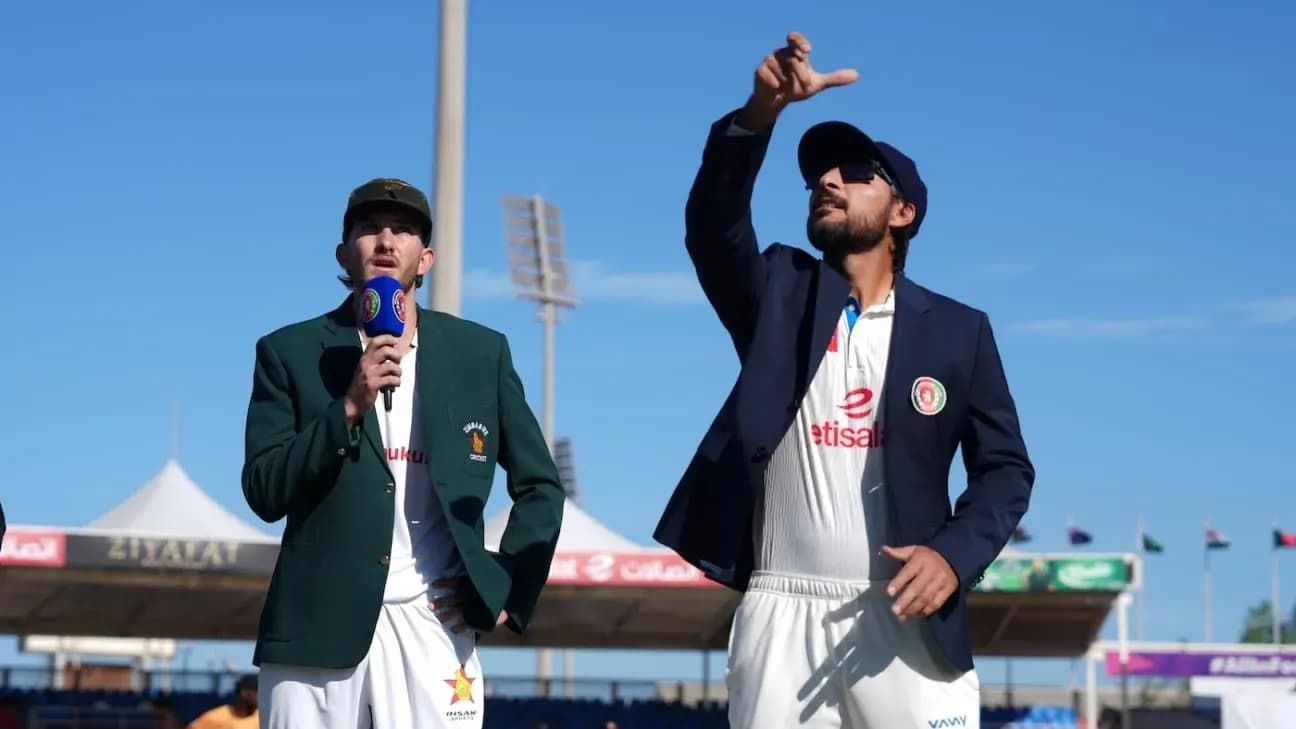
An ICC working group led by former New Zealand batter Roger Twose had pushed a bold idea: open the WTC to all 12 Full Members in a single division. For Zimbabwe, Ireland and Afghanistan – the three Full Members excluded from the current nine-team structure – that proposal represented more than a format tweak. It was a lifeline.
They threw their weight behind it. Those boards argued that without WTC status, their Test programmes are stuck in a holding pattern, their development throttled by a lack of meaningful, high-stakes cricket. With no promotion-relegation system, they also see no pathway into the top nine, no matter how much they invest or improve.
But sentiment runs into spreadsheets. Several members remain unconvinced that adding more teams will generate more commercial value, a crucial point given the WTC is still built on bilateral scheduling. The ICC only runs the final; the rest depends on boards striking deals that make financial sense. For now, that financial caution is winning.
Long meetings, short odds
The tension spilled into the Chief Executives’ Committee meeting on Saturday, a session that dragged on for more than four hours. Those in the room described robust debate, with impassioned interventions from the three excluded Full Members, who see the next two cycles as decisive for their Test futures.
Cricket South Africa aligned firmly with the expansion camp. Chief executive Pholetsi Moseki delivered what was described as a rallying cry, underlining South Africa’s support for a broader Test ecosystem rather than a closed shop.
The heavyweights remain harder to read. The positions of the BCCI and Cricket Australia are still unclear, at least publicly. England have shown some willingness to engage with the outer circle – they have played Zimbabwe and Ireland in one-off Tests in recent years – but the ECB is believed to be wary of a larger WTC, citing travel demands and financial strain.
That tension runs through another piece of the puzzle: England’s long-awaited return to Zimbabwe. The ECB and Zimbabwe Cricket are close to finalising a historic tour, ending a three-decade absence. Initially pencilled in for 2028, the trip is now set for 2030 and is expected to include a Test at Victoria Falls. A powerful symbol, yes, but still outside the WTC tent.
Slim hope of a compromise
For those pushing expansion, Sunday’s board meeting has the feel of a last stand. The mood is pessimistic. Officials backing change are bracing for the status quo to be rubber-stamped, their window of opportunity closing for another six years.
There is, however, a sliver of hope. One compromise still faintly alive is a 10-team WTC, a halfway house that would at least open the door to one more side. Zimbabwe’s enthusiasm for Test cricket strengthens that case: they managed to play 10 Tests in 2025, even if that dropped to just two this year. The appetite is there; the fixtures are not.
Whether that is enough to shift a room dominated by financial calculations remains to be seen.
Bigger questions on the table
While the WTC debate dominates the politics, it is not the only major item in Bali. A sweeping strategic review into the future of international cricket, covering all three formats, is also set to land on the board’s table.
Global consulting firm McKinsey presented its findings on Saturday night, outlining scenarios and stress points as administrators try to balance Test cricket, ODIs and T20s in a crowded, franchise-heavy calendar. Those discussions will shape how much space Test cricket is given – and who is allowed to occupy it.
For now, though, the direction is clear. The WTC is on course to remain a nine-team league, guarded by the same gatekeepers, while three Full Members wait outside, wondering how long they can keep selling a dream that has no clear way in.